
Last updated October 16, 2026
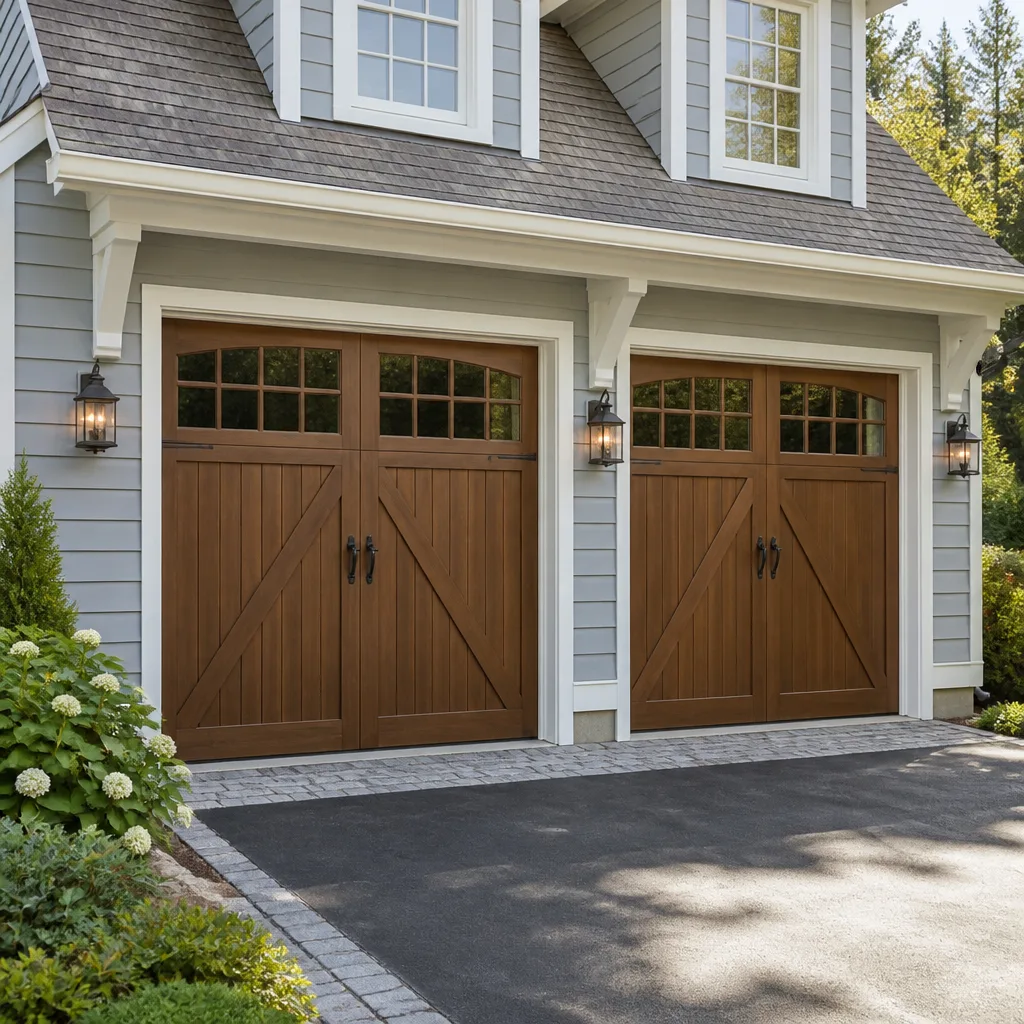 Carriage house
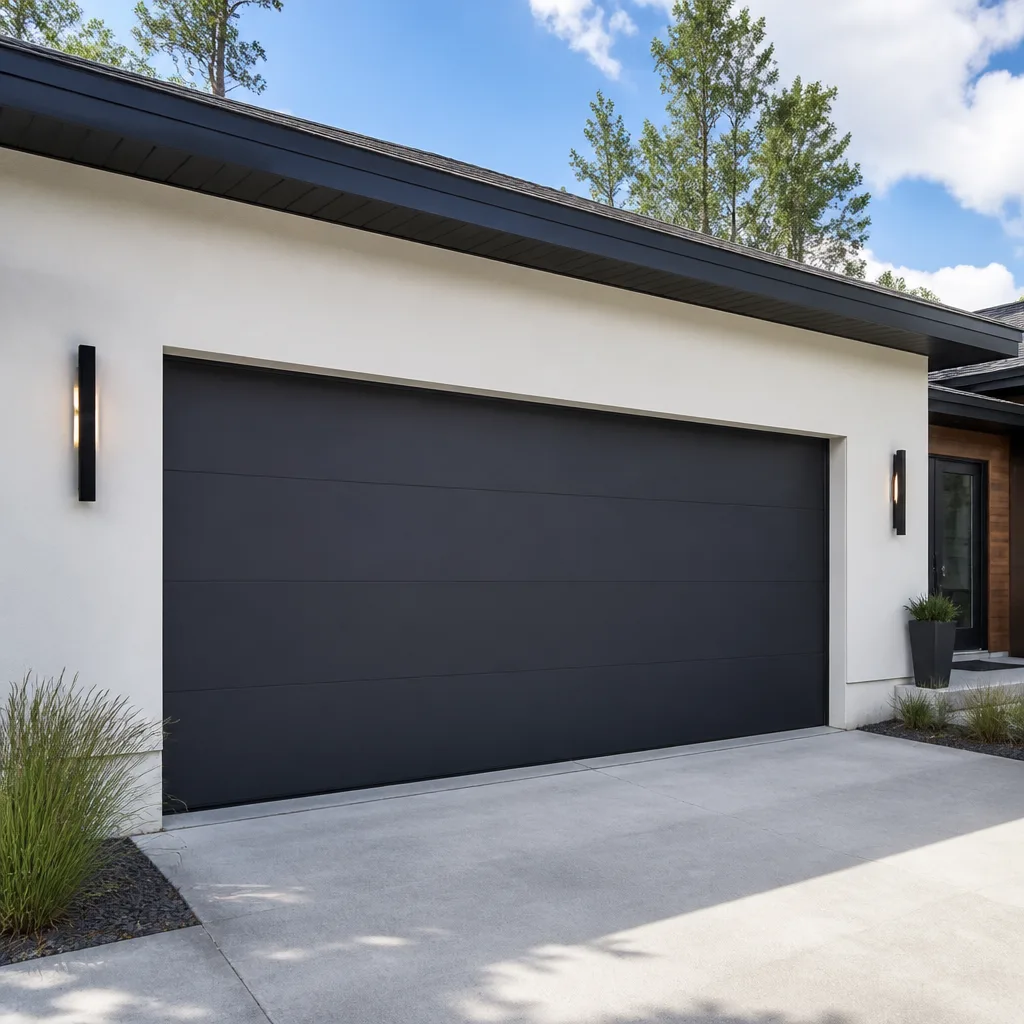 Modern flush
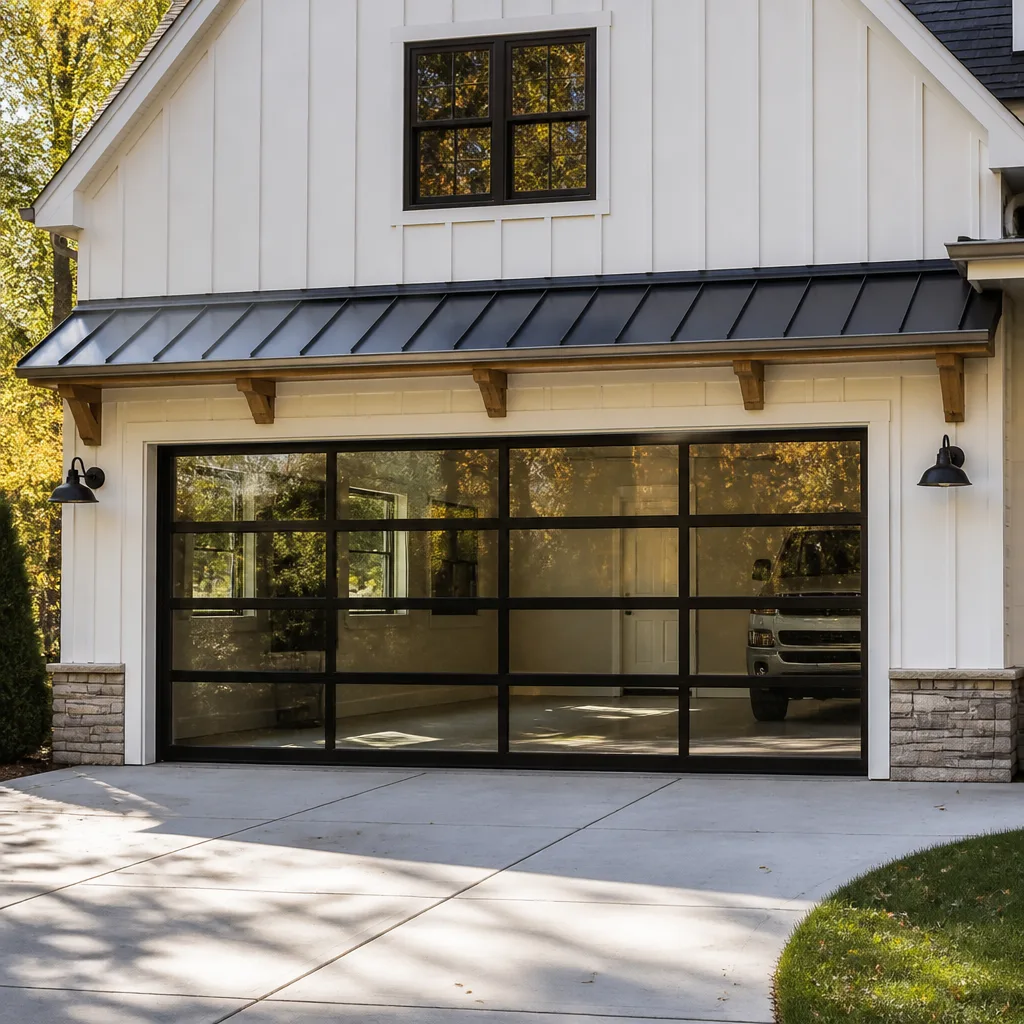 Full-view glass
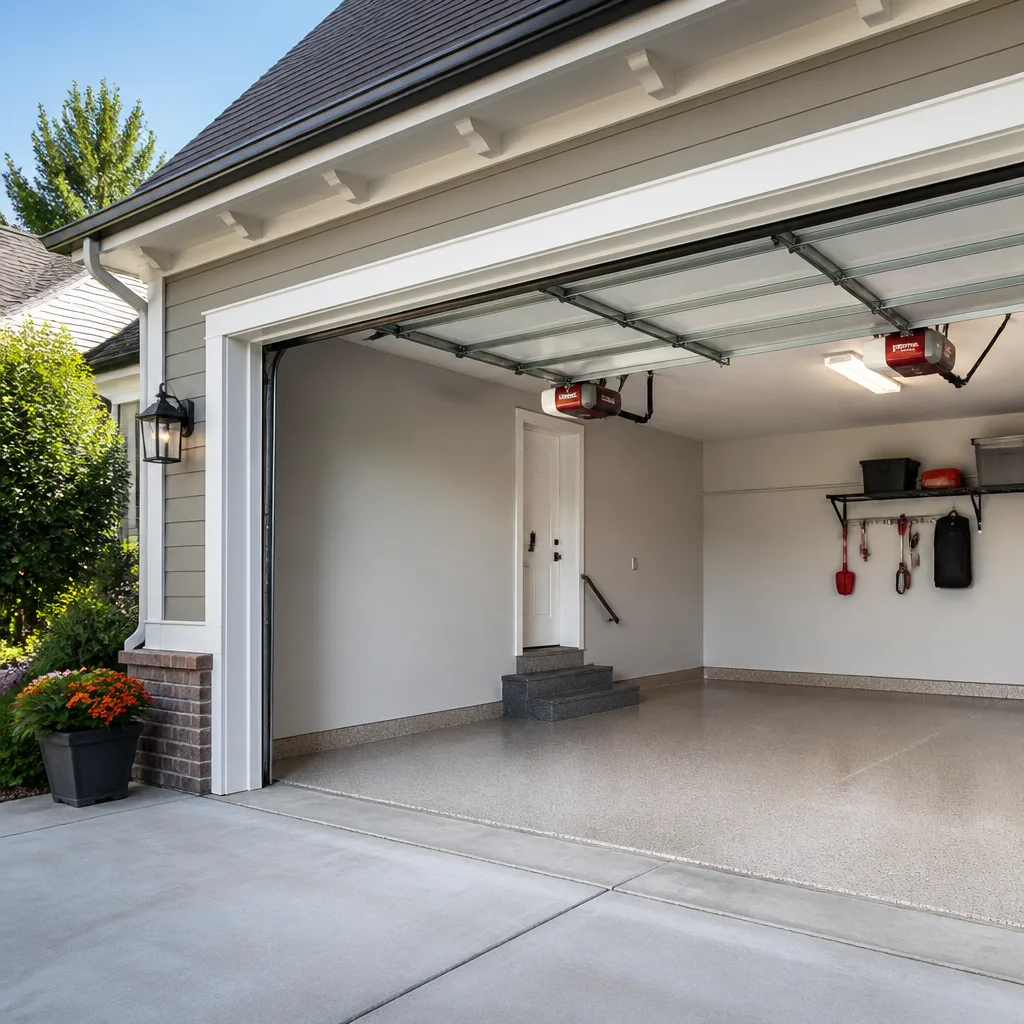 LiftMaster openers
 Chamberlain openers
Full 25-point door and opener safety check with every visit - springs, cables, rollers, tracks, and your LiftMaster or Chamberlain opener included
You get a price before we start. It does not change when the truck arrives.
Get your free estimateGarage Door Repair Maintenance Checklist for Jacksonville Homeowners
Most garage door maintenance checklists tell you to lubricate your springs twice a year. In Jacksonville’s coastal humidity, that interval can mean the difference between a spring that lasts its rated 10,000 cycles and one that snaps at 6,000, usually on a Sunday morning when the whole family is trying to get out the door for church or a soccer game. This guide is built for Northeast Florida specifically, because what works in Ohio or Arizona does not hold up against brackish air, summer heat indexes above 100 degrees, and the sudden barometric swings of Atlantic storm season. You’ll learn exactly what to check each month, which products actually hold up in Florida humidity, how to test your door’s safety features to meet Florida building code, and the five corrosion points that most Jacksonville homeowners never look at until the door stops moving.
Quick Answer
Jacksonville homeowners need a garage door maintenance routine built around Florida’s climate: lubricate rollers and hinges with a lithium-based grease every 3 months (not twice a year like drier climates), inspect the five salt-air corrosion points monthly, test the auto-reverse safety mechanism every 30 days, complete storm-prep before June 1, and schedule a professional spring and cable inspection once a year. Most of the work takes 15 minutes and keeps a door that should last 15 to 20 years operating safely for its full lifespan.
Styles & brands we work with
Table of Contents
- Jacksonville’s Month-by-Month Maintenance Calendar
- The Right Lubricants for Florida Humidity (And What Ruins Your Door)
- How to Test Your Door’s Auto-Reverse and Limit Switches Yourself
- The Five Salt-Air Corrosion Points You’re Probably Missing
- Owner-Safe Maintenance vs. Jobs That Require a Technician
- Springs, Cables, and the 10,000-Cycle Question in Jacksonville’s Heat
- Pre-Storm and Post-Storm Maintenance: What to Check Before June 1
- Common Mistakes to Avoid
- When to Call a Professional
- Frequently Asked Questions
- The Bottom Line
Jacksonville’s Month-by-Month Maintenance Calendar
Jacksonville is not one climate. It is three overlapping ones: a long, wet summer, a brief but genuinely cold stretch from late December through February, and a spring that alternates between pollen storms and afternoon thunderstorms. Your garage door notices all of it. The metal expands and contracts. The rubber seals bake or swell. The lubricant evaporates or washes away. What follows is the calendar we recommend to homeowners across Jacksonville: from Ortega to San Marco, from Mandarin to the Beaches, the seasonal rhythm holds up everywhere in Duval County.
January – February: Cold Snap Inspections
Jacksonville does get below freezing, and when it does, metal contracts. Torsion springs, the large coils mounted above the door that do most of the lifting, get brittle in cold weather. This is when springs snap. Your checklist for these two months:
- Inspect torsion springs visually for gaps or separation in the coil. A broken spring shows a visible two-inch gap in the coil.
- Open and close the door manually after pulling the release handle (with the door closed). A properly balanced door stays put at waist height. A door that drops or climbs is a spring tension issue that needs a pro.
- Check weatherstripping along the bottom and sides for brittleness. Rubber that has hardened and cracked lets cold air in and humidity do damage at other times of year.
- Run the opener and listen for grinding or hesitation. Cold temperatures thicken old grease, forcing the motor to work harder.
March – April: Pollen and Humidity Onset
Live oak pollen coats everything in Jacksonville during March and April. It gets into track seams, roller bearings, and hinge knuckles. When the first humidity spike follows in April, that pollen turns into a paste that acts like sandpaper. Your checklist:
- Wipe down the tracks with a dry microfiber cloth. Do not grease the tracks. Grease on tracks collects pollen and turns into an abrasive slurry.
- Vacuum or blow out the photo-eye sensors near the floor on both sides of the door. Pollen film on the lens is a common cause of doors that reverse for no reason.
- Lubricate hinge knuckles and roller stems with a lithium-based grease (more on this in the next section).
- Check the bottom rubber seal for pollen accumulation and wipe it clean. A clean seal makes full contact and keeps out humidity, bugs, and the occasional snake seeking dry ground.
May: Pre-Storm Season Prep
Atlantic hurricane season begins June 1. In May, do the complete storm-prep checklist detailed in the storm section below. This is the month to schedule your annual professional inspection so any issues are resolved before the first named storm.
June – September: Humidity-Peak Checks
These four months are when Jacksonville’s relative humidity sits between 75% and 90% most days. Lubricants break down. Hardware rusts faster than at any other time of year. Your checklist, to run monthly from June through September:
- Lubricate hinge knuckles, roller stems, and the torsion spring(s) with lithium-based grease every 4 weeks. This is the interval, not twice a year.
- Inspect the five corrosion points listed below. Salt air from the St. Johns River and the Atlantic does not take the summer off.
- Run the auto-reverse test on the first weekend of every month. Heat can affect the sensitivity of the opener’s force settings.
- Look for rust bloom on cable ferrules, the small metal collars at the ends of the lifting cables. Rust here weakens the cable attachment point.
October – November: Post-Storm Recovery
When hurricane season winds down, run a full recovery inspection. Even if no storm made landfall, wind-driven rain and pressure changes stress every component. Check the tracks for debris, listen for new sounds, and re-test the auto-reverse. If the door took any wind hit, check that the panels still seal evenly and the door opens true.
December: Year-End Full Assessment
Walk through the entire checklist one more time before the cold snap months arrive. Note what has needed attention during the year and call a technician for anything recurring. A recurring issue is a symptom of an underlying problem, not a maintenance item.
The Right Lubricants for Florida Humidity (And What Ruins Your Door)
Few topics generate more bad garage door advice than lubrication. The standard internet recommendation is to spray everything with WD-40 twice a year. In Jacksonville, that advice shortens the life of your door. Here is exactly what to use, on what, and what to avoid.
Lithium-Based Grease vs. Silicone Spray
For metal-to-metal contact points, hinge knuckles, roller stems, torsion springs, and the trolley carriage, the part that slides along the opener rail, use a white lithium-based grease. It is thick enough to stay put in Florida heat and does not run off like spray lubricants do. Apply it every 3 months in Jacksonville, and monthly during June through September. In our experience, doors serviced on a quarterly lithium schedule in Jacksonville routinely outlast doors lubricated annually by three to five years.
Silicone spray is right for rubber and plastic parts: weatherstripping, the bottom seal, and the photo-eye housing. It conditions rubber without breaking it down. Avoid using silicone on metal moving parts; it is too thin and washes away in humidity.
What Not to Use in Jacksonville’s Heat
- WD-40: It is a solvent and water displacer, not a lubricant. It strips existing grease and leaves metal parts dry.
- Heavy axle grease: It is too thick for household applications. It traps dirt and pollen, forming the abrasive paste that wears down hinge knuckles.
- Petroleum-based penetrating oils on rubber seals: They degrade rubber in Florida heat. Once the bottom seal hardens and cracks, humidity and pests get in.
- Motor oil: It slings off moving parts, collects debris, and stains the door panels.
How to Lubricate Correctly
- With the door closed, pull the release handle and operate the door manually so you can access the hinges and rollers without the opener force involved.
- Apply lithium grease to each hinge knuckle, the pivot point where the hinge sections meet, on both sides of the door.
- Apply a thin line of lithium grease to roller stems, the metal shaft holding each roller, but not the roller wheels themselves. Nylon wheels should not be greased; their bearings are sealed.
- Spray silicone onto a clean cloth and wipe down the weatherstripping and bottom seal. Do not spray directly onto the door surface.
- Wipe away any excess grease. A light film is the goal. Excess grease drips onto the door and attracts dust and pollen.
How to Test Your Door’s Auto-Reverse and Limit Switches Yourself
Since 1993, federal law has required every garage door opener sold in the United States to include an auto-reverse mechanism. Florida building code incorporates this requirement and adds its own force-setting thresholds. The test takes five minutes and should be done monthly. If your door fails it, stop using the door immediately and call a technician.
The Auto-Reverse Test
- Open the door fully using the wall button or remote.
- Lay a roll of paper towels or a 2×4 piece of lumber flat on the floor directly under the center of the door’s path.
- Close the door using the wall button. Watch not the door itself, but the point of contact.
- The door should reverse within 2 seconds of contacting the object. If it does not reverse, the force setting is too high and the opener is unsafe.
This is the test every Jacksonville homeowner should run at least monthly in summer, when heat changes the sensitivity of the opener’s force logic. It is the single most important safety check on the list.
The Photo-Eye Sensor Test
Photo-eye sensors, the two small units mounted 4 to 6 inches above the floor on each side of the door opening, project an invisible beam. If anything breaks the beam while the door is closing, the door reverses. To test them:
- Start closing the door using the wall button.
- Wave a broom handle or a piece of cardboard across the beam path while the door is moving down.
- The door should reverse immediately and return to the open position.
If the door continues downward, first check that the sensor lenses are clean. In Jacksonville, pollen and dust accumulation on the lenses is a common cause of sensor failure. If cleaning does not fix it, the sensors need an adjustment or replacement.
Limit Switch Check
Limit switches tell the opener where to stop when opening and closing. If your door hits the ground and immediately bounces back up, or if the opener keeps running after the door is fully open, the limit switches are misaligned. You can check the travel limits through the opener’s control panel, typically accessed by holding the appropriate adjustment button until the door reaches the correct position. However, if you are not comfortable adjusting the force and travel settings on your opener, called the travel module on LiftMaster and Chamberlain models, do not guess: this is a low-cost service call. The force threshold Florida building code requires is that the door reverse when it meets an object, not when it has already crushed it. The distinction matters.
The Five Salt-Air Corrosion Points You’re Probably Missing
Jacksonville is surrounded by water: the Atlantic on one side, the St. Johns River winding through the middle, and the Intracoastal Waterway threading between them. The air carries salt, and salt accelerates corrosion on every exposed metal surface. The five points below fail before anything else. Homeowners doing a visual inspection typically check the panels and the tracks. They miss these:
1. Hinge Knuckles
Every hinge on a sectional garage door has a knuckle, the cylindrical joint where the hinge pin passes through. In Jacksonville, we see these rust from the inside out. The first sign is a fine orange dust around the pin. By the time the hinge binds, the knuckle has already started to fatigue. Check for rust bloom and stiffness when the door operates manually.
2. Cable Ferrules
The lifting cables attach to the bottom brackets through a ferrule, a small metal collar swaged onto the cable end. Salt air corrodes the ferrule and the loop it forms around the bracket pin. A ferrule that looks fuzzy with rust is near failure. When a cable releases under spring tension, it can whip violently. If you see anything but smooth metal on your cable ends, have them inspected. Cable replacement under tension is not a DIY job, end of discussion.
3. Bottom Bracket Bolts
The bottom brackets attach the lifting cables to the door panels. The bolts that hold them rust at the threads where they pass through the panel. In coastal Jacksonville neighborhoods, like Atlantic Beach and Neptune Beach, these bolts corrode at double the rate of inland areas like Orange Park and Bartram Park. A bottom bracket that tears off the panel is a catastrophic failure, typically at the worst possible moment. Check for rust staining running down from the bolt holes.
4. Roller Stems
Nylon rollers contain a steel stem and a sealed bearing. The stem rusts where it enters the hinge. Once the stem corrodes, the wheel wobbles, which causes uneven track wear and, over time, a louder door. Look for play in the wheel when you wiggle it by hand. Any wobble calls for replacement.
5. Track Seams
Look closely where horizontal track sections meet vertical track sections. This seam is a moisture trap. Rust starts at the seam and spreads along the track profile. If rust has pitted the track surface, the rollers cannot ride smoothly. Light surface rust can be cleaned with steel wool and protected with a rust inhibitor. Pitted tracks need replacement.
Owner-Safe Maintenance vs. Jobs That Require a Technician
A clear line runs through garage door maintenance. Everything on one side is safe for a homeowner with basic hand tools. Everything on the other side is dangerous enough that a mistake can cause serious injury or death, and attempting it voids manufacturer warranties on the parts involved. The line is not arbitrary. It is drawn by the fact that the torsion spring system, the coiled assembly mounted above the closed door, stores enough energy to lift several hundred pounds. If it releases that energy unexpectedly, the force is comparable to a small explosion.
Owner-Safe Tasks
- Visual inspection of every component on the monthly schedule above
- Lubricating hinge knuckles, roller stems, and torsion springs with lithium grease
- Cleaning tracks with a dry cloth and removing debris
- Testing the auto-reverse and photo-eye safety mechanisms
- Cleaning photo-eye lenses and checking for obstructions
- Wiping down weatherstripping and bottom seals with silicone spray
- Tightening loose bolts on the track brackets, hinge plates, and opener mounts
Technician-Required Jobs
- Adjusting, replacing, or winding torsion springs. Spring replacement is the most common job we handle as part of our Garage Door Repair in Jacksonville service, and it is never a safe DIY project.
- Replacing or re-tensioning lifting cables. Cables are under spring tension, and a snap can lacerate whatever is in the way.
- Replacing bottom brackets that secure the cables to the door panels.
- Adjusting the opener’s internal force settings beyond the basic travel limit check.
- Replacing or rebalancing a full door system. A door that is out of balance puts excess strain on the opener motor and all hardware.
- Any repair involving the tracks that requires removing or reshaping a section of track.
The rule we use: if visible tension is involved, call a technician. The springs, cables, and bottom brackets all fall under that rule. What separates a trained pro from a homeowner on these jobs is not knowledge alone; it is the specialized winding bars and cable tools plus the experience of handling loaded components without putting a hand in the line of fire.
Springs, Cables, and the 10,000-Cycle Question in Jacksonville’s Heat
Garage door springs are rated in cycles. One cycle is a single open-and-close operation. A standard torsion spring, the large coil above the door, is rated for 10,000 cycles. A high-cycle spring might be rated for 15,000 to 20,000. In a household where the door opens four times a day, a 10,000-cycle spring lasts about seven years. In Jacksonville’s humidity, however, the math changes. Corrosion at the spring’s mounting points and on the coil surface creates stress concentration. The spring does not unwind evenly; it snaps at the point where rust has thinned the steel. In our experience, springs in beachside areas of Jacksonville rarely reach their rated cycle count without a corrosion failure first.
What to Look For with Springs
- A visible gap in the coil means the spring has snapped. Do not operate the door manually. The opener will not lift the full weight safely.
- Rust on the spring coil is more than cosmetic. Rust pits create weak points.
- If the door is noticeably heavier to lift manually, the spring is losing tension or nearing failure.
- If the spring makes a creaking or popping sound when the door moves, the coil is binding on itself.
Cable Health
Lifting cables are galvanized steel, but galvanization only delays rust; it does not prevent it in a salt-air environment. Check for fraying along the full cable length every month. A single broken strand is a sign that the cable is compromised. Frayed cables can snap under tension without warning.
What Spring Replacement Costs in Jacksonville
As a Jacksonville homeowner, you should know the numbers before you ever need the job. A standard torsion spring replacement in the Jacksonville market runs between $220 and $350 per spring, including labor. Most doors have two springs, so a full spring replacement typically lands between $280 and $600 depending on spring size, cycle rating, and whether high-cycle springs are selected. High-cycle springs (often rated at 15,000 to 20,000 cycles) run $40 to $80 more per spring than standard 10,000-cycle springs. On a home you plan to keep for another decade, the upgrade usually pays for itself by avoiding a second replacement. Every one of our jobs, including spring replacement, comes with a written price handed to you before a single bolt is turned, and the repair is backed by the 365-Day Done Right Promise: if it fails within 365 days, we come back and make it right at no charge.
Pre-Storm and Post-Storm Maintenance: What to Check Before June 1
Atlantic hurricane season runs June 1 through November 30. Jacksonville has not taken a direct hit from a major storm since Hurricane Dora in 1964, a fact that breeds complacency. But tropical storms and glancing blows happen. Hurricane Matthew in 2016 and Hurricane Irma in 2017 pushed significant storm surge into the St. Johns River and left thousands of Jacksonville garage doors wind-damaged. A maintained door survives better than a neglected one.
Pre-Storm Checklist (May)
- Run the full monthly maintenance checklist from the calendar section above.
- Lubricate all hinge knuckles and roller stems. A smooth-running door is less likely to jam when barometric pressure changes affect the metal.
- Test the auto-reverse and photo-eye sensors and correct any problems.
- Check that the emergency release handle works, that red cord hanging from the opener rail. You may need to operate the door manually if power fails.
- Inspect the weatherstripping and bottom seal for gaps. Wind-driven rain enters through those gaps.
- If your garage door faces the prevailing wind direction (east or southeast for most Jacksonville homes), check for panel-to-panel play. A door that flexes in the track is more vulnerable to wind damage.
Post-Storm Checklist (November, or after any significant storm)
- Open and close the door fully and listen for new sounds: grinding, scraping, or popping.
- Check that the tracks are still plumb and parallel. Wind pressure can bow a track outward.
- Look for water stains on the panels and around the bottom seal. Moisture that got inside the panel can cause delamination over time.
- Re-run the auto-reverse test. Storm-driven debris can knock photo-eye sensors out of alignment.
- Inspect the spring for rust bloom that can accelerate after storm exposure.
If you are not sure whether your door took structural damage, schedule a professional inspection. We offer a full inspection as part of our Garage Door Installation in Jacksonville service line, and the same technicians who install new doors can tell you whether an existing door is still sound.
When to Call a Professional
Some maintenance tasks require a trained eye and proper tools. Call a technician if you notice any of the following: a broken torsion spring, a frayed or rusted lifting cable, a bottom bracket pulling away from the door panel, a track bent out of alignment, an opener that fails the auto-reverse test, or a door that feels heavy and unbalanced when opened manually. Also call if you hear popping, grinding, or scraping sounds that persist after lubrication. These are not nuisance noises; they are symptoms of mechanical stress. Doyle Garage Doors Jacksonville offers free estimates in Jacksonville, call (904) 549-9535, and every job includes a written price before any work begins. When our technician arrives, you will already know their name and face, because we send both before the visit, a small thing that matters when you are opening your home to someone new, under the Threshold Standard our team has followed since 2001.
See the difference
 Before
 After
After Before
 After
After Before
 After
AfterCommon Mistakes to Avoid
- Lubricating with WD-40. It strips grease and leaves your hinges and springs dry. In Jacksonville’s humidity, dry steel rusts fast. Use lithium grease on metal parts.
- Greasing the tracks. Tracks are designed to run dry. Grease collects pollen and dirt, turning the track into sandpaper. Wipe tracks clean, never lubricate them.
- Ignoring a noisy door. A door that squeaks or grinds is telling you something. Waiting until it fails usually turns a $20 hinge into a $300 repair.
- Skipping the monthly auto-reverse test. It takes five minutes. It is the difference between a door that stops at a child’s toy and a door that does not stop. Do not skip it.
- Attempting spring or cable repairs yourself. Winding a torsion spring without the right bars and experience is how people get seriously hurt. This is the line. Do not cross it.
- Replacing one spring when both are worn. When one spring snaps, the other is usually near the end of its life too. Replacing only one leaves an unbalanced door and a shorter interval before the next failure.
- Using petroleum-based products on rubber seals. Petroleum breaks down the rubber compound. Once the bottom seal cracks, heat and humidity get in. Use silicone spray on rubber only.
Frequently Asked Questions
Every three months is the baseline for Jacksonville, and monthly from June through September when humidity peaks. Drier climates can get away with twice a year, but the combination of heat, humidity, and salt air reduces lubricant life. Use white lithium grease on metal parts and silicone spray on rubber. Call (904) 549-9535 if you are not sure what to use on a specific component.
A single torsion spring replacement in Jacksonville typically costs between $220 and $350, and most doors require two springs, bringing the total to between $280 and $600. High-cycle springs run $40 to $80 more per spring and usually last twice as long. With our written-price policy, you will know the exact number before any work begins, no verbal estimates, no surprise charges at the end of the job.
Yes. Lay a roll of paper towels on the floor under the door’s path and close the door with the wall button. The door should reverse within 2 seconds of contacting the roll. For the photo eyes, wave a broom handle across the beam while the door is closing. The door should reverse immediately. Run both tests monthly, especially in summer when heat affects opener sensitivity.
Jacksonville’s salt air from the Atlantic and the St. Johns River accelerates corrosion on exposed steel components, especially hinge knuckles, cable ferrules, and bottom bracket bolts. Homes east of the Intracoastal Waterway experience corrosion at roughly double the rate of inland neighborhoods. Monthly visual checks of the five corrosion points in this guide will catch rust before it becomes a failure.
Manufacturer warranties cover defects in materials and workmanship, not failures caused by lack of maintenance. If a spring fails from rust because it was never lubricated, the warranty likely will not apply. Most manufacturer warranties also require that spring and cable work be performed by a trained professional to remain valid. Attempting a DIY spring replacement typically voids the warranty on the entire door system.
Once a year, ideally in May before hurricane season begins. The inspection should cover spring condition, cable integrity, track alignment, opener force settings, and all five corrosion points. The inspection should also include a written report. Our technicians in Jacksonville perform these inspections and provide a written quote for any recommended work before anything is started, with a free estimate on any job we find.
The Bottom Line
A garage door in Jacksonville faces a harder life than a garage door in almost any other city in the country: salt air, eight months of humidity, genuine cold snaps, and the annual threat of tropical weather. The maintenance checklist that works in Ohio will not keep up here. Run the monthly calendar in this guide, use lithium grease on the right parts, test the safety features every month, inspect the five corrosion points, and have a professional inspection every May. Fifteen minutes a month on a garage door that opens and closes 1,500 times a year is a small price to keep it running for 15 years or more. If anything in this guide reveals an issue, call (904) 549-9535 and we will send you a technician whose name and photo you already have, along with a written price before any work begins.
Written by Aaron Teague, Owner at Doyle Garage Doors Jacksonville, serving Jacksonville since 2001.