
Last updated October 16, 2026
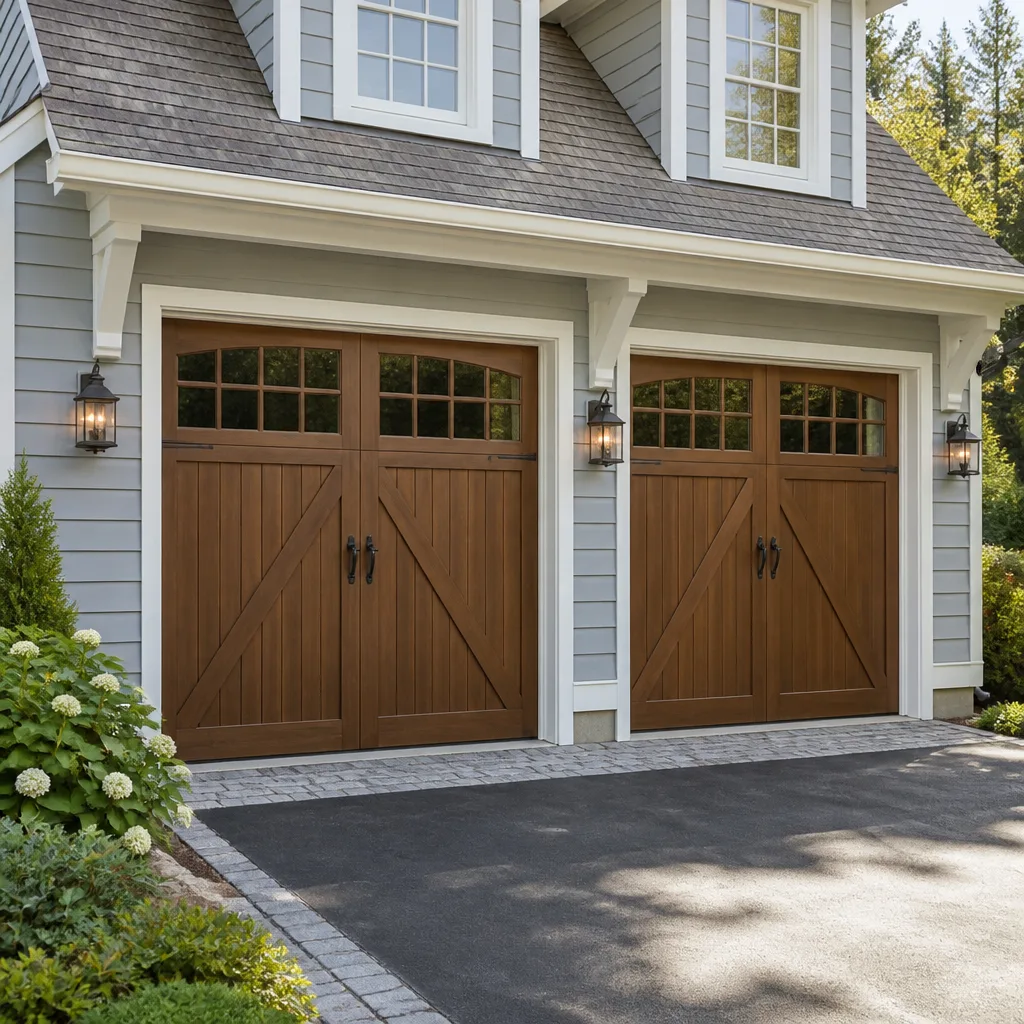 Carriage house
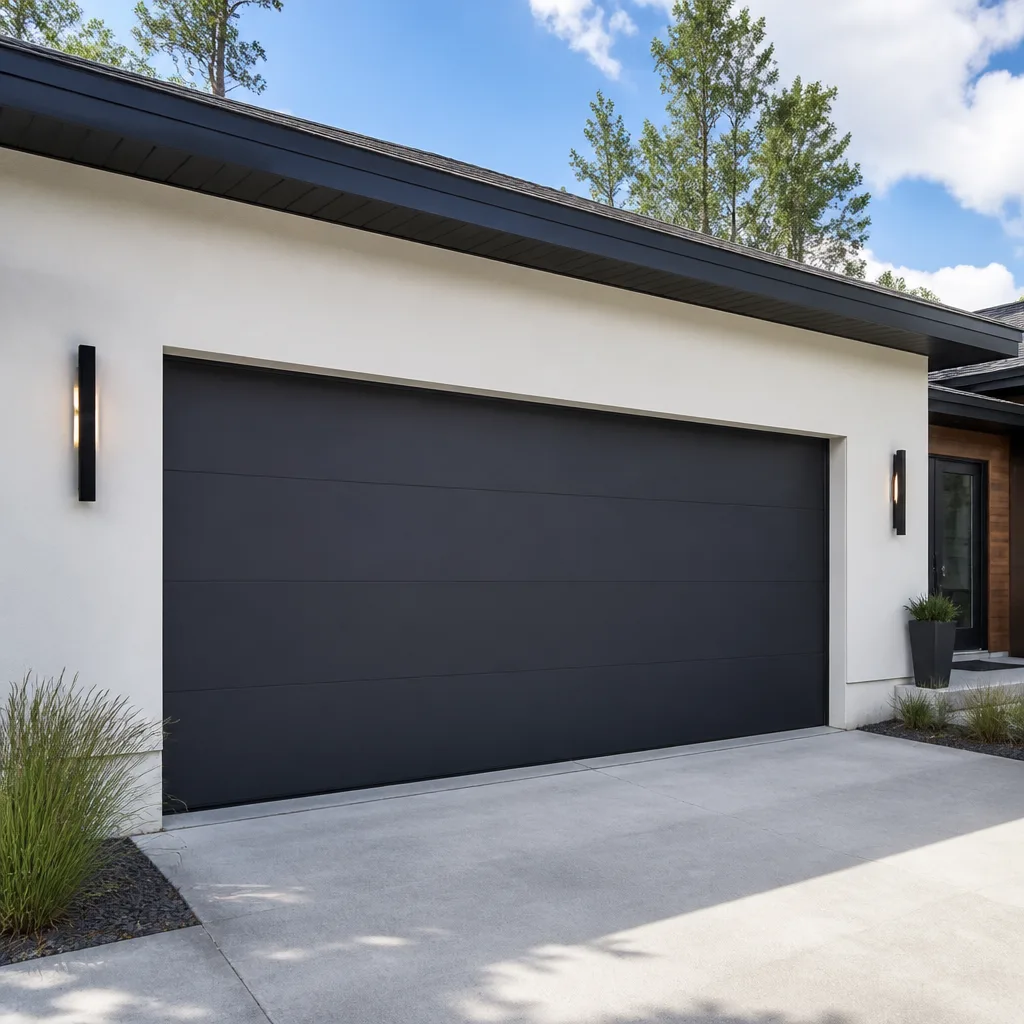 Modern flush
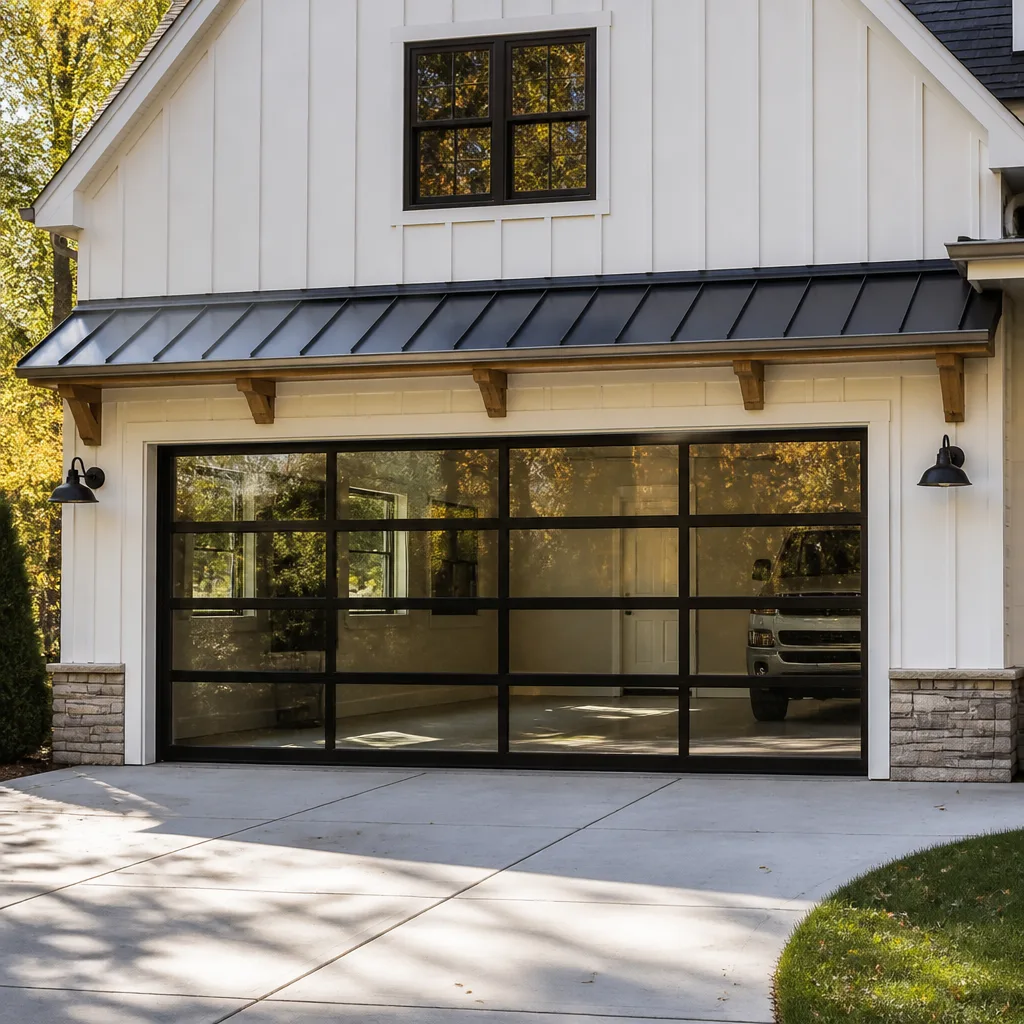 Full-view glass
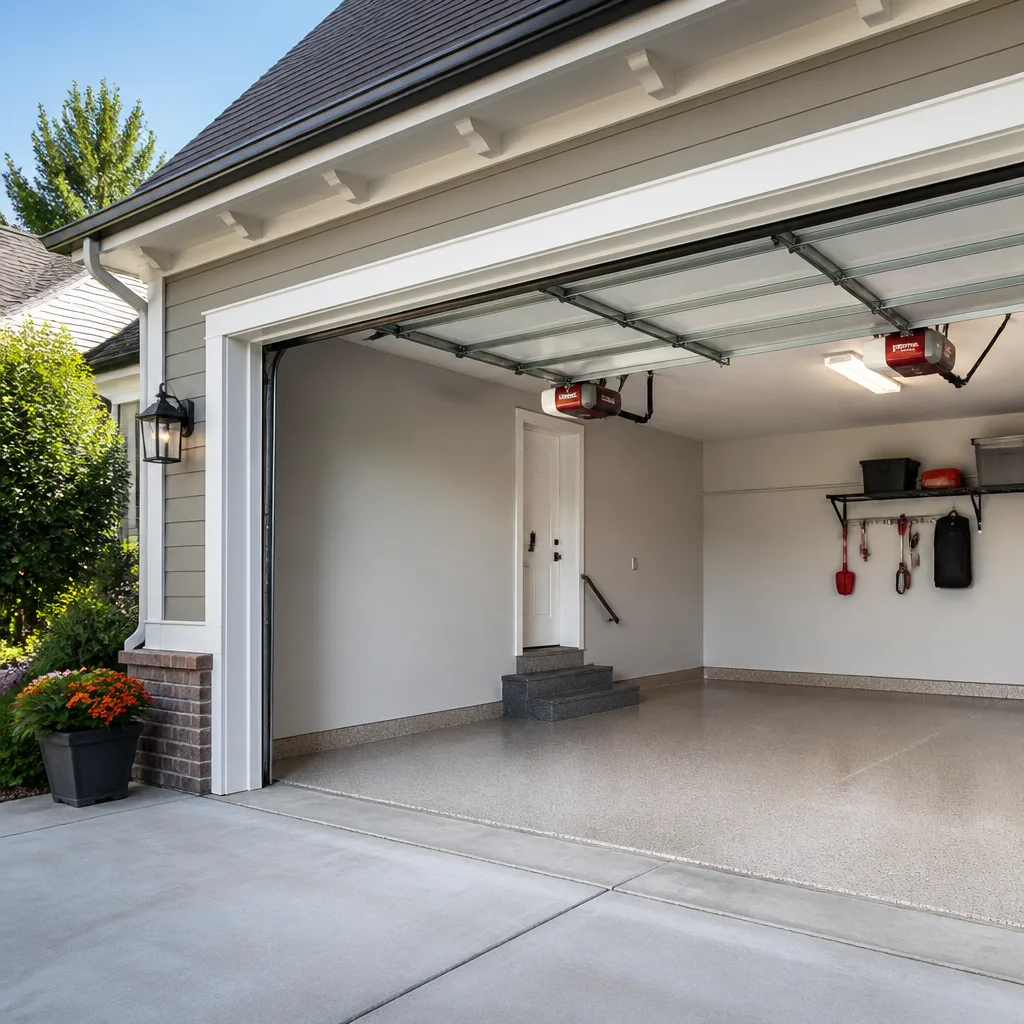 LiftMaster openers
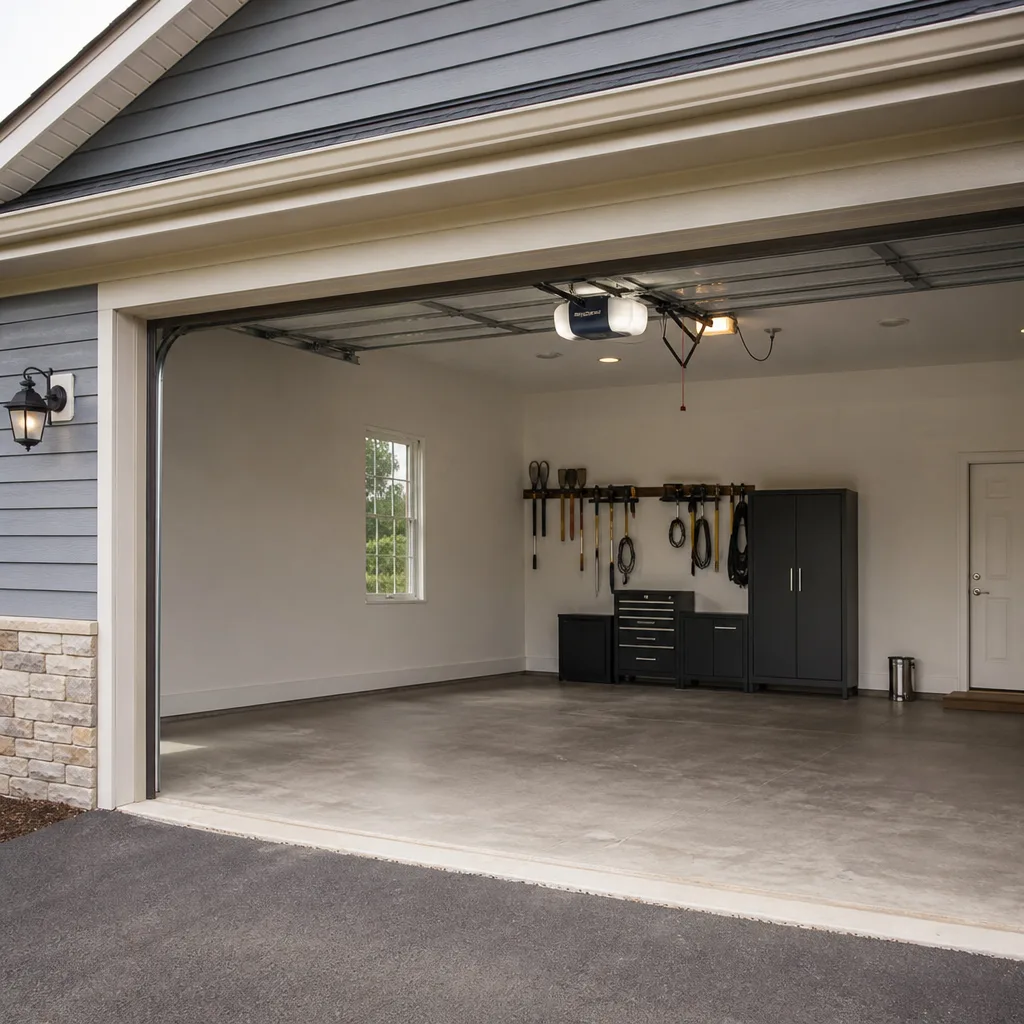 Chamberlain openers
Full 25-point door and opener safety check with every visit - springs, cables, rollers, tracks, and your LiftMaster or Chamberlain opener included
You get a price before we start. It does not change when the truck arrives.
Get your free estimateGarage Door Warning Signs: A Jacksonville Homeowner’s Reference Guide
Most garage door failures announce themselves days or weeks in advance. A door that hesitates for two seconds before moving is not “just getting old.” That pause is typically a trolley carriage or torsion spring under uneven tension, and in Jacksonville we see the pattern repeat constantly: the hesitation shows up, gets ignored, and progresses to complete failure within 30 to 90 days. The repair that would have cost $180 becomes a $900 emergency involving a door off its tracks, a snapped cable, or a spring that lets go at 2 a.m. This guide teaches you to read the signals your garage door is already sending, so you can schedule a repair during business hours instead of waiting for the moment the door stops opening entirely. For a broader overview, see our The Complete Guide to Garage Door in Jacksonville. Written by a Jacksonville garage door company that has serviced thousands of doors across Duval County since 2001, every symptom below is something we have diagnosed in person, in this city’s specific climate and housing stock.
Quick Answer
Garage door warning signs fall into four categories: sounds (grinding, popping, scraping, squealing), movement problems (hesitation, jerking, uneven lifting), visual cues (frayed cables, rust streaking, cracked springs, misaligned tracks), and operational failures (door works manually but not with the opener, reverses mid-travel, sits crooked when closed). In Jacksonville, the most common early warning signs are a grinding sound near the top of the door (trolley carriage wear or a failing opener gear), popping from the spring assembly (a torsion spring with a developing crack), and orange rust streaking on panel edges (moisture intrusion from the city’s high humidity and salt air). Any one of these signals means a professional inspection is warranted. Most repairs in Jacksonville cost between $120 and $400 when caught early, versus $600 to $1,200 after a full failure.
Styles & brands we work with
Table of Contents
- Symptom-to-Cause Reference Table: What Each Sound and Movement Tells You
- The Ground-Level Visual Inspection Checklist (No Ladder Required)
- Why a Door That Works Manually But Struggles Under the Opener Is Almost Never an Opener Problem
- Jacksonville-Specific Warning Signs: Salt Air, Humidity, and Heat
- Three Signs That Require Same-Day Service vs. Scheduled Appointments
- What Repair Timelines Actually Look Like (and What Delaying Costs You)
- Understanding Springs and Cables: The Components That Cause the Most Damage When Ignored
- Garage Door Opener Warning Signs: When the Motor Is the Problem
Symptom-to-Cause Reference Table: What Each Sound and Movement Tells You
A garage door speaks through its sounds. Each one points to a different component, a different failure timeline, and a different repair cost. Here is what we listen for when a Jacksonville homeowner calls and says “my garage door is making a noise.”
Grinding
A gritty, metal-on-metal grinding sound near the top of the door, especially when the opener is running, almost always points to a worn trolley carriage or a stripped drive gear inside the opener unit itself. The trolley carriage is the component that slides along the opener rail and physically pulls the door up and down. On a Chamberlain or Genie opener that is 10 to 15 years old, the internal nylon drive gear strips down over time and produces exactly this sound. Repair timeline: schedule within 2 to 3 weeks. Ignoring it means the opener eventually stops moving the door at all. Cost to repair: $110 to $220 for a trolley carriage replacement or drive gear rebuild, depending on the opener model.
Popping
A sharp pop or bang from the spring assembly, most often when the door first starts moving or reverses direction, indicates a torsion spring with a developing crack or fatigue point. Torsion springs, the large coils mounted above the door that do most of the lifting, are rated for a specific number of cycles. In Jacksonville, where the average door cycles four to six times daily, a standard 10,000-cycle spring lasts five to seven years. A popping sound means the spring’s internal structure has been compromised. Repair timeline: this is a high-priority warning. The spring can snap completely without further warning, and when it does, the full weight of the door, typically 150 to 250 pounds, drops onto whatever is in its path. Cost to repair: $180 to $340 for a torsion spring replacement, including parts and labor. Schedule immediately.
Scraping
A dragging or scraping sound along the side of the door usually indicates a roller that has worn flat or a track that has shifted out of alignment. Jacksonville homes built on the city’s clay-heavy soil see more track misalignment than homes in other regions, because the concrete slab shifts slightly with seasonal moisture changes. When the track moves, the rollers drag against the track walls instead of rolling freely. Repair timeline: you have time, but not unlimited time. Two to four weeks is reasonable. Cost to repair: $90 to $180 for roller replacement or track realignment.
Squealing
A high-pitched squeal is the most benign of the four sounds, but it still needs attention. It indicates rollers with dried-out bearings or hinges that need lubrication. Left alone, squealing turns into grinding, because the metal-on-metal friction wears the components down. Repair timeline: within two weeks. This is also the one DIY-friendly fix on the list, though we recommend having a professional do it during a routine tune-up so the rollers and hinges get inspected at the same time. Cost to address: $75 to $120 for a professional lubrication and roller inspection.
Hesitation at Startup
A door that pauses for one to two seconds before moving when you hit the button is under uneven tension. Either one of the two torsion springs has weakened, or the opener’s travel limits have drifted. What you are hearing is the opener motor straining before the door’s weight overcomes the imbalance. We see this in Jacksonville neighborhoods like Mandarin and Arlington constantly, and the progression is predictable: the hesitation gets longer over a period of weeks, then the door starts rising unevenly, then one side of the door begins to hang lower than the other when opened. By the time the unevenness is visible, the repair has moved from a spring tune-up ($80 to $120) to a full spring replacement ($180 to $340). Do not wait for the visible stage.
Door Reverses Mid-Travel
If the door goes up a few inches or a few feet, then stops and reverses back down, the most common cause in Jacksonville is an obstructed or misaligned photo-eye sensor. These are the small sensors mounted near the floor on both sides of the door opening. High humidity causes condensation on the lenses, and the city’s frequent afternoon thunderstorms create temporary power fluctuations that reset the opener’s sensor alignment. Before calling for service, wipe the sensor lenses with a dry cloth and confirm nothing is blocking the beam. If the door still reverses after that, you are looking at a sensor wiring issue or a logic board problem in the opener, and that repair runs $80 to $180.
The Ground-Level Visual Inspection Checklist (No Ladder Required)
You do not need to climb anything to spot most garage door problems before they become emergencies. Here is a five-step inspection you can do from the ground in under ten minutes. We recommend doing it once every three months, and after any severe weather event including the summer thunderstorms and the occasional tropical system that blows through Jacksonville. For a seasonal maintenance schedule, see our Seasonal Garage Door Care for Jacksonville: Year-Round Homeowner’s Guide.
- Check the cables for frayed strands. The lift cables run vertically along both sides of the door, connecting the bottom brackets to the spring assembly above. A healthy cable is smooth and uniform. A cable in trouble has individual wire strands poking out, like a rope coming unraveled, or visible rust staining at the connection points. If you see three or more broken strands anywhere along the cable, that cable is a same-day repair. When a cable snaps, the door slams down on one side and can pull itself off the track. Do not operate the door if you see fraying.
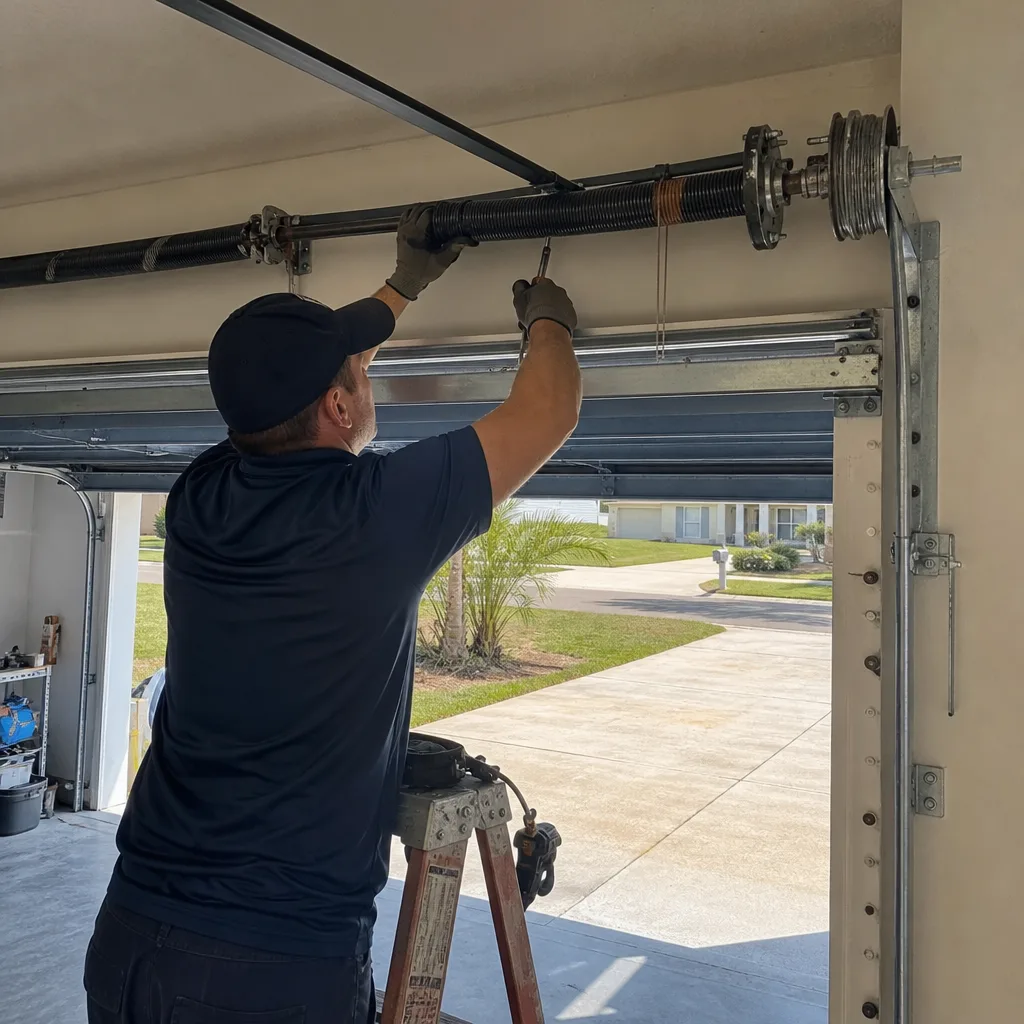
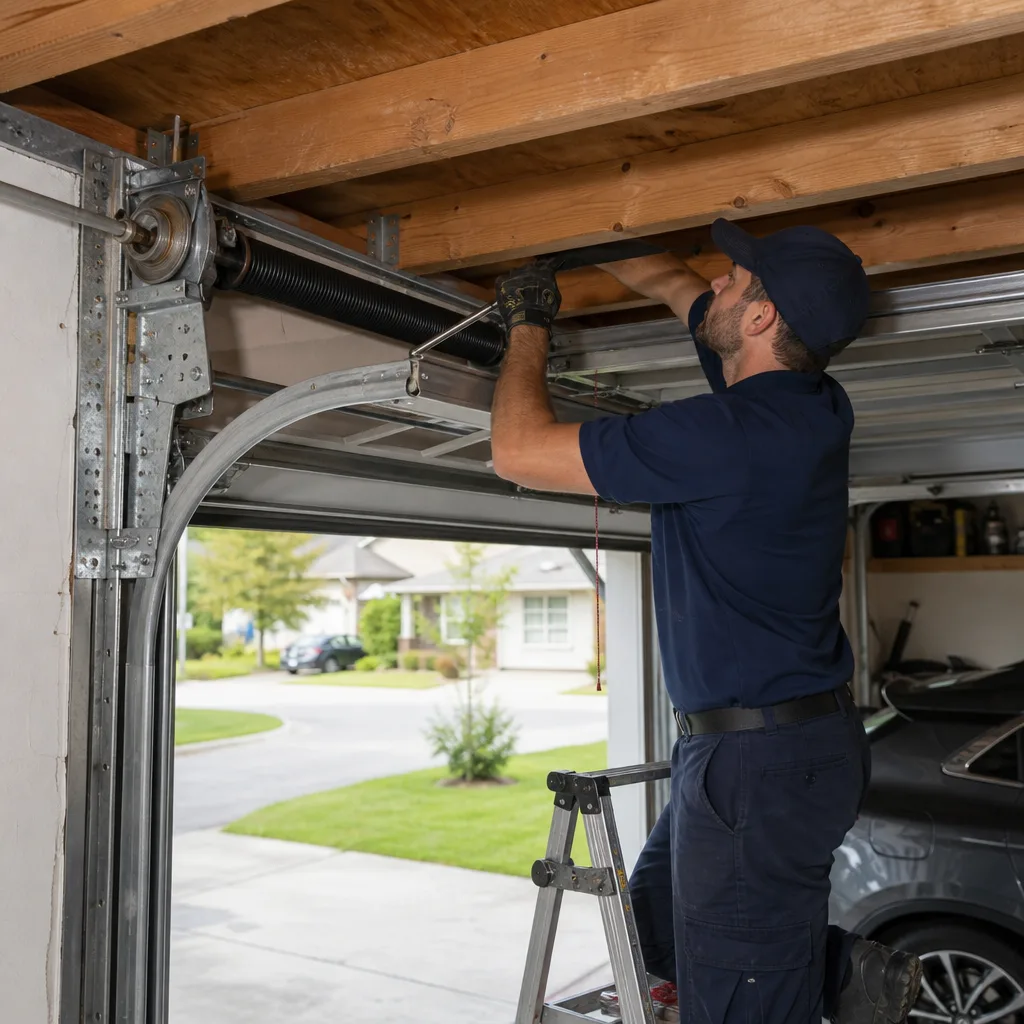
- Examine the torsion spring without touching it. Stand inside the garage, look up at the spring mounted above the closed door, and look for a visible gap in the coil. A torsion spring under tension is one continuous coil. If you see a separation, a gap where the metal has pulled apart, or a line that looks like a crack running through the coil, that spring has already failed or is about to. Do not stand under it, do not touch it, and do not open the door. Call a professional immediately.
- Look at the panel gaps with the door closed. When the door is fully closed, the seams between panels should be roughly even from left to right. If one side of a seam is pinched tight and the other side has a visible gap, the door is racking, which means the track alignment or cable tension is uneven. This is the visible confirmation of the hesitation problem described above.
- Run your eyes along the tracks for rust and debris. The vertical and horizontal tracks should be clean and smooth. In Jacksonville, look specifically for orange-brown rust speckling on the track surface and for salt-haze cloudiness on the galvanized finish, a dull white film that indicates the zinc coating is breaking down in the salt air. Once the zinc coating fails, the underlying steel corrodes quickly, and the track loses structural integrity.
- Check the concrete near the door frame for white staining. White, chalky deposits on the concrete slab near the bottom of the door frame are called efflorescence. It is caused by water moving through the concrete and carrying minerals to the surface. In Jacksonville, efflorescence near a garage door frame signals persistent moisture intrusion, which accelerates rust on the bottom panel, the tracks, and the cable anchors. If you see it, address the drainage around the door and expect to see corrosion on the lower door components.
Why a Door That Works Manually But Struggles Under the Opener Is Almost Never an Opener Problem
This is one of the most common misdiagnoses in the garage door trade, and it costs Jacksonville homeowners money. A door that opens smoothly by hand when you pull the red emergency release cord, but labors, strains, or refuses to move under opener power, is almost never an opener problem in the traditional sense. The opener is doing its job: it is trying to move a door that has become too heavy or too resistant for it to handle.
The culprit is usually the torsion spring. These springs are what actually carry the door’s weight. The opener motor is designed to move a properly balanced door, which requires very little force. When a torsion spring weakens, the door’s effective weight increases, and the opener’s motor strains against a load it was never intended to lift. In our experience in Jacksonville, this happens most often in doors that are eight to twelve years old, which is right around the time the original springs reach the end of their cycle rating.
The second possibility is trolley carriage wear. The trolley carriage is the component that connects the opener’s drive system to the door itself. Over time, the plastic or metal teeth inside the carriage wear down, which means the opener motor is spinning but the force is not being transferred efficiently to the door. The result is a door that moves sluggishly, hesitates, or makes a grinding sound from the top of the opening while the motor whirs.
Neither of these problems is fixed by replacing the opener. A new opener installed on a door with weakened springs will strain exactly like the old one did, and it will burn out its motor within a couple of years. The correct fix in most cases is to replace the springs (or the trolley carriage) and keep the opener. Spring replacement runs $180 to $340, versus $400 to $700 for a new opener, which is the repair many homeowners are convinced they need. A proper diagnostic visit costs nothing at Doyle Garage Doors Jacksonville, and it prevents paying for a repair you do not need. If you’re planning a larger project, read How to Hire a Garage Door Contractor in Jacksonville: A Step-by-Step Guide.
Here is the same information as a simple decision tree:
- Door opens manually with reasonable effort, but opener struggles: replace or tune the springs. Do not replace the opener.
- Door opens manually but feels heavier than it used to: spring fatigue. Schedule a spring inspection now.
- Door opens manually with normal effort, opener runs but door does not move at all: the trolley carriage has disengaged or the drive gear has stripped. This is an opener repair, not a door repair.
- Door will not open manually at all, even with the emergency release pulled: the spring has failed completely, or a cable has snapped. Same-day service required. Do not attempt to force the door open.
Jacksonville-Specific Warning Signs: Salt Air, Humidity, and Heat
Jacksonville’s climate creates garage door problems that a homeowner in Ohio or Colorado would never see, and they show up as visual signals you can learn to recognize. The city’s combination of Atlantic salt air, summer humidity that routinely exceeds 85 percent, and intense UV exposure accelerates corrosion and material breakdown in ways specific to this region.
Orange Rust Streaking on Panels
Homeowners in Jacksonville Beach, Atlantic Beach, Neptune Beach, and the Intracoastal communities see this more than anyone else in the city. Orange or rust-colored streaks running down from the bottom edge of the garage door panels indicate that moisture has breached the panel’s protective coating and the steel underneath has begun to oxidize. In the salt air of the beaches, this process happens two to three times faster than it does inland. Once rust streaking appears on the panel face, the panel’s structural integrity is already compromised, and you can expect the rust to spread along the bottom edge within 12 to 18 months. A single panel replacement typically runs $250 to $450, depending on the door brand. Clopay and Amarr both make panels that hold up better to coastal salt air than budget alternatives, and we recommend them for any Jacksonville home within five miles of the Intracoastal.
White Efflorescence on Concrete Near the Door Frame
Efflorescence is the white, chalky mineral deposit that forms on concrete when water moves through it. Near a garage door frame, it indicates that water is pooling against the slab or wicking up from the soil. In Jacksonville, where summer afternoon thunderstorms dump inches of rain in an hour, drainage issues around the garage are common. The water that causes efflorescence is the same water that rusts your cable anchors, corrodes your bottom brackets, and accelerates track degradation. If you see efflorescence, fix the grade or drainage first, then inspect the lower door components for corrosion. The door components are usually the first casualties.
Salt-Haze Cloudiness on Galvanized Track
Galvanized steel track is coated with zinc to resist corrosion. When that zinc coating begins to break down, it does not turn orange like rust. It turns a dull, cloudy white-gray, like a film on the metal surface. This is the same process that corrodes the undercarriages of cars in coastal cities. Once the zinc is gone, the underlying steel rusts quickly, and the track sections lose their smooth surface. A door running on corroded track grinds, binds, and eventually derails. If your track has visible salt haze and the door is making any new sound while moving, schedule a track inspection. Track replacement in Jacksonville typically runs $150 to $300 depending on the door size and configuration.
Heat-Related Spring Fatigue
Heat itself does not cause torsion springs to fail, but it amplifies existing fatigue. Jacksonville’s summer temperatures above 90 degrees cause metal to expand, which increases the internal stress on a spring that already has microscopic fatigue cracks. In our experience, spring failures cluster in July and August, and they happen disproportionately in the late afternoon, when the garage has been baking in the sun all day and the ambient temperature is at its peak. A spring that survives the winter in Jacksonville can still snap on the first 95-degree afternoon because the heat exposed a weakness that was already there. This is why the annual spring inspection matters more here than in most cities.
Three Signs That Require Same-Day Service vs. Scheduled Appointments
Not every garage door warning sign is an emergency. Some need attention this week; some need attention this afternoon. Here is how to sort them.
Same-Day Service Required
Three specific conditions mean you should call a professional today and not operate the door again until it is fixed. All three are dangerous because they involve a door that can fall or a door that is no longer being restrained by its safety systems.
- A visibly separated torsion spring. If you can see a gap in the coil of the spring mounted above the door, the spring has already failed. The door’s full weight is now resting on the remaining spring, if there is one, or on the opener and cables if there is not. This is the condition most likely to result in a sudden, violent failure. Do not stand under it. Do not open the door. Call for same-day service.
- A frayed or partially severed lift cable. If the cable has visible broken strands or has started to unravel, it can snap completely the next time the door moves. When one cable goes, the door twists, jams, and pulls itself off the track. The door can then fall, and a falling garage door is heavy enough to kill a person or crush a car. Same-day service is required.
- A door that is visibly off its track. If the rollers have come out of the track, or the door is cocked at an angle and cannot be moved in either direction, you have an active mechanical failure. Forcing the door at this point will bend the track, snap the cables, and potentially pull the spring assembly apart. This is the most expensive of the three emergencies to fix, and trying to fix it yourself makes it more expensive still.
Scheduled Appointment Is Fine
Everything else in this guide can wait for a scheduled appointment, typically within one to five business days. Grinding sounds, squealing, hesitation at startup, door reversing mid-travel, rust streaking, and salt haze on the track are all signs you should call soon but do not need to drop everything to address. The difference is that these conditions are stable: the door still operates, the safety systems are intact, and the risk of a sudden, dangerous failure is low. Schedule the appointment, avoid using the door more than necessary, and the repair will be straightforward.
What Repair Timelines Actually Look Like (and What Delaying Costs You)
Jacksonville homeowners routinely underestimate how expensive a delayed garage door repair becomes. Here is a realistic look at the cost curve, based on what we see across Duval County in 2025.
A door that hesitates at startup, accompanied by a mild grinding sound, is typically a $120 to $180 fix if addressed in the first two weeks. That repair involves adjusting spring tension, replacing a roller or two, and lubricating the moving parts. Wait three months and the same door typically needs a full torsion spring replacement at $180 to $340, because the unbalanced load has fatigued the spring that was compensating for the worn roller. Wait six months and you are looking at a damaged track, a stripped opener gear, and potentially a cable replacement, which moves the total into the $500 to $800 range. Wait until the door fails completely and you can add emergency dispatch fees, and in many cases a new opener, which puts the total at $900 to $1,200.
The same pattern applies to every warning sign in this guide. Garage door problems do not get cheaper when ignored, and in Jacksonville’s humid, salt-tinged air, they worsen faster than they do inland. A repair that you schedule on your own terms, during normal hours, costs less than the same repair performed at 9 p.m. on a Friday during the summer thunderstorm season.
Every quote from Doyle Garage Doors Jacksonville is written down and handed to you before a single bolt is turned. You will know the exact price before work begins, and every repair includes a written 365-day guarantee. If the repair fails within that year, we come back and make it right at no charge, no argument required.
Understanding Springs and Cables: The Components That Cause the Most Damage When Ignored
Torsion springs and lift cables are the two components involved in nearly every serious garage door accident, and they are the two components most likely to show early warning signs before failing. Understanding what they do helps explain why the warnings matter.
Torsion Springs
A torsion spring is the large coil mounted horizontally above the door. It stores mechanical energy by twisting, and that stored energy is what actually lifts the door. The opener motor does not lift the door. It guides the door while the spring does the lifting. This is why a door with a broken spring feels impossibly heavy when you try to open it manually: you are now lifting the full 150 to 250 pounds of the door yourself, with no mechanical assist.
Every torsion spring has a cycle rating, which is the number of open-close cycles it is engineered to survive. A 10,000-cycle spring is the industry standard for residential doors. In Jacksonville, the average household opens and closes the garage door four to six times per day, which means a standard spring lasts between five and seven years. A door that sees more traffic, like a household with multiple drivers or a home business, can burn through a spring in three to four years.
We recommend dual-spring systems for any Jacksonville home where the door is the primary entry point. Two springs share the load, which extends the life of both. When one spring in a dual system breaks, the other spring prevents the door from dropping suddenly. The repair cost for a dual spring replacement is higher, typically $280 to $450, but the safety margin and extended lifespan are worth it for most families.
Important safety note: torsion springs are under immense tension, and attempting to replace or adjust one without the proper winding tools and training causes serious injuries every year. This is not a DIY repair. When a spring fails, step away from the door and call a professional. The tools used to wind and unwind torsion springs are specialized, and the process requires a level of care that cannot be learned from a video.
Lift Cables
The lift cables are the steel cables that run from the bottom brackets on either side of the door up to the spring assembly. Their job is to transfer the spring’s lifting force to the door itself. When a cable is in good condition, the force is distributed evenly across the door. When a cable is compromised, the load shifts to the remaining cable and to the track, which is when doors rack, bind, and derail.
Cable warning signs are entirely visual: individual strands poking out from the cable, rust discoloration at the attachment points, or a cable that appears loose when the door is closed. Any of these means the cable is close to failure. Never attempt to replace a lift cable yourself. The same tension that makes the spring dangerous applies to the cable, and a cable that snaps during a DIY attempt acts like a steel whip.
Garage Door Opener Warning Signs: When the Motor Is the Problem
Most opener failures are misdiagnosed, as we covered above, but openers do genuinely fail, and the warning signs are easy to mistake for door problems. Here is how to tell the difference.
The opener motor itself is the component that fails most often in humid climates. Jacksonville’s summer moisture causes condensation inside the opener housing, which corrodes the circuit board over time. Opener circuit boards fail gradually: the door stops responding to one remote but works with another, or the opener starts running for a second after the door reaches its limit, or the lights flicker when the door moves. These are electrical symptoms, not mechanical ones, and they point to the opener rather than the door.
The opener drive system is the second failure point. A Chamberlain, LiftMaster, Genie, or Craftsman opener uses either a chain, a belt, or a screw drive to move the trolley carriage along the rail. Chain drives are the loudest and most durable; belt drives are quieter and wear out faster; screw drives are sensitive to lubrication and fail quickly when they run dry. A grinding sound that is clearly coming from the opener unit, not from the door itself, usually means the drive gear inside the opener has stripped. When this happens, the motor runs but the door does not move, or moves only in short jerks.
A garage door opener replacement in Jacksonville typically costs $400 to $700 installed, depending on the model and drive type. A belt-drive LiftMaster with a backup battery runs at the higher end. A basic chain-drive opener runs at the lower end. Opener replacement is a scheduled job, not an emergency, unless you have no other way to close your garage at night. If your opener has failed and you cannot secure the door, call us for same-day service, and we will get the door closed and locked before the replacement is scheduled.
Common Mistakes to Avoid
- Ignoring the hesitation. A door that pauses before moving is the single most predictive warning sign we track. Every month that passes moves the repair from a spring tune-up to a spring replacement to a door-off-track emergency. Hesitation is not normal aging. It is a mechanical imbalance.
- Spraying WD-40 on the tracks. Tracks should be clean and dry. Lubricant on the track attracts dust and grime, which turns into a gritty paste that accelerates roller wear. Lubricate the rollers and hinges, never the track surface.
- Replacing the opener when the springs are the problem. A new opener installed on a door with weak springs will fail within two years. Diagnose the spring balance before spending money on an opener. This is a $400 to $700 mistake we see Jacksonville homeowners make regularly.
- Adjusting the spring yourself. Torsion springs hold enough tension to cause serious injury or death. The winding tools and safety procedures are not available at a hardware store. Every year, people are hospitalized because they tried to save $200 on a spring repair. The same applies to cable replacement.
- Ignoring rust streaking on panels. In coastal Jacksonville, panel rust spreads quickly. A small rust streak this year is a rusted-through bottom panel next year. The panel replacement costs more than the early intervention would have.
- Putting off a cable inspection after any impact. If a car, a bicycle, or a lawn mower has ever hit the door, the cables may have taken damage that is not visible from the outside. After any impact, have the cables and the door balance checked, even if the door seems to work fine.
- Pulling the emergency release while the door is open. If the door is up and the spring is weakened, pulling the red release cord can cause the door to slam down. Only pull the emergency release when the door is fully closed.
See the difference
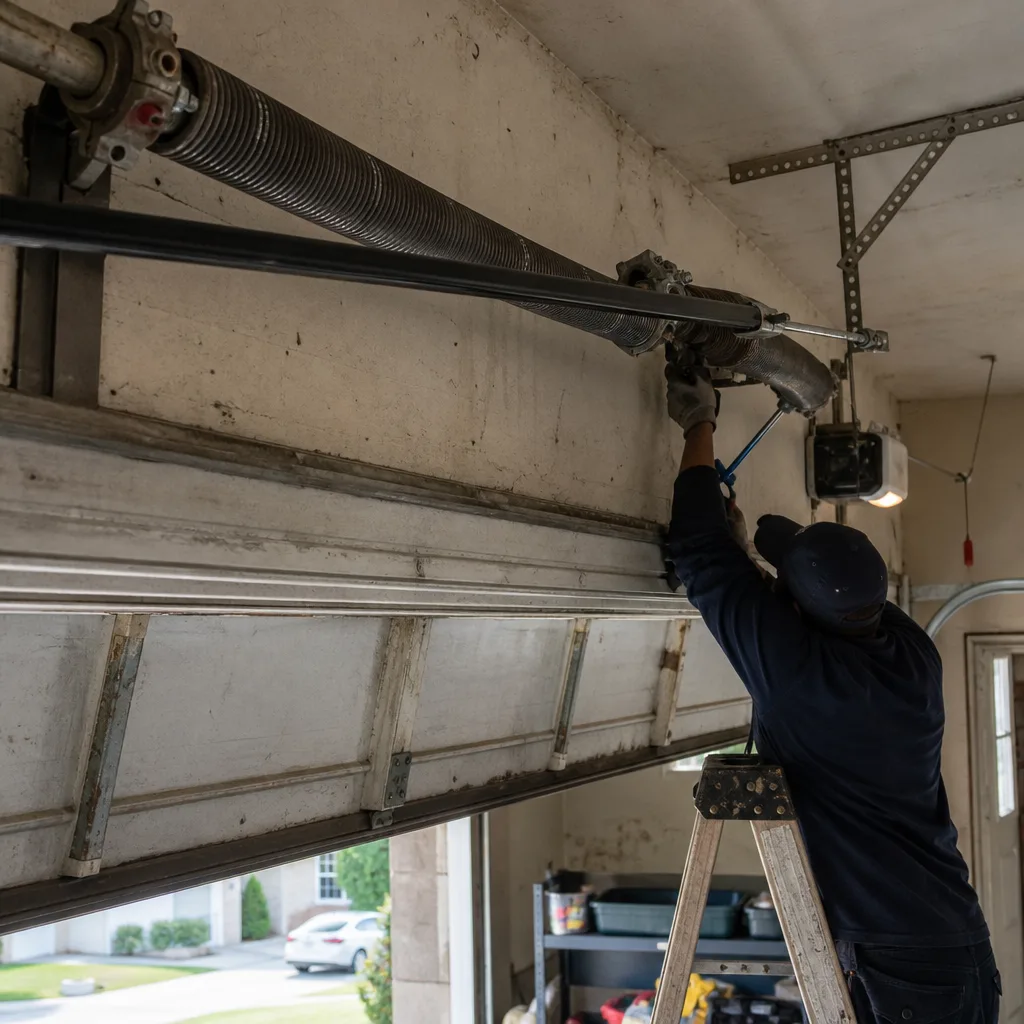 Before
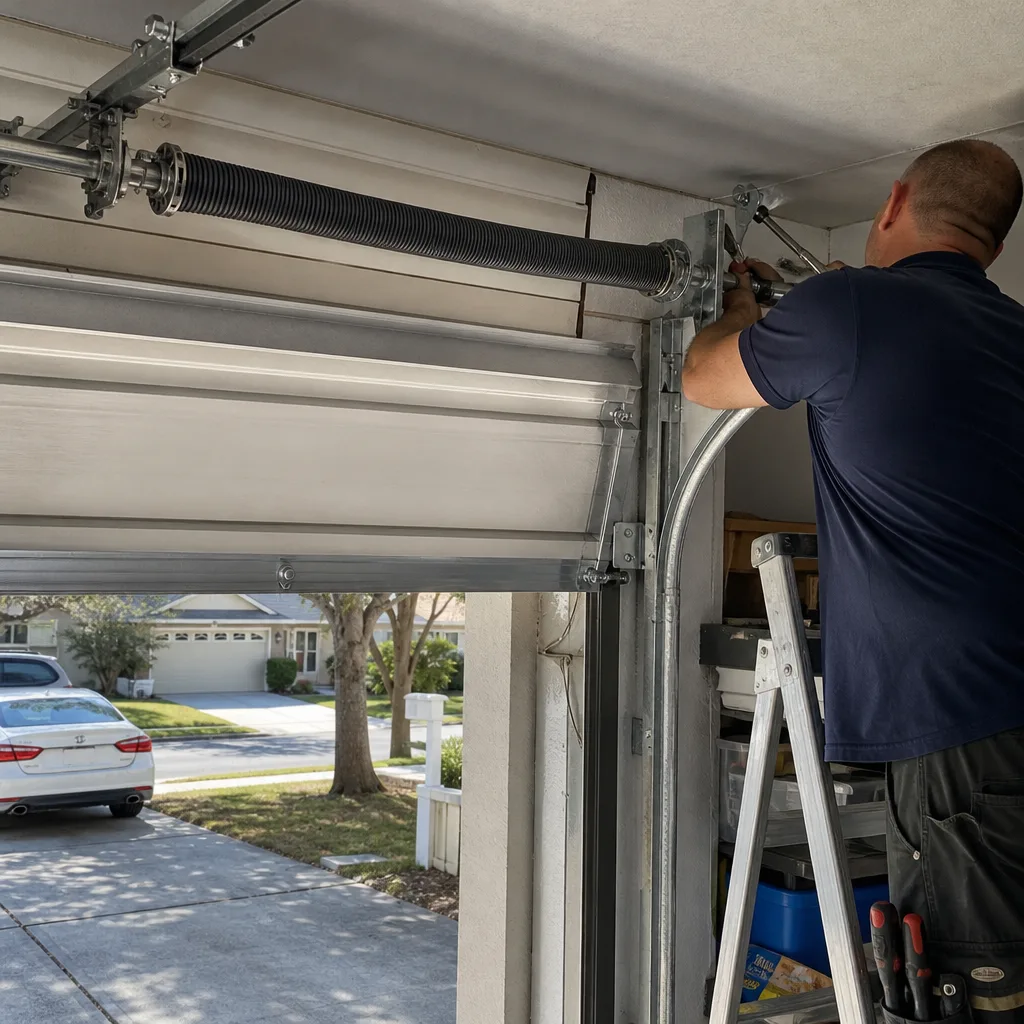 After
After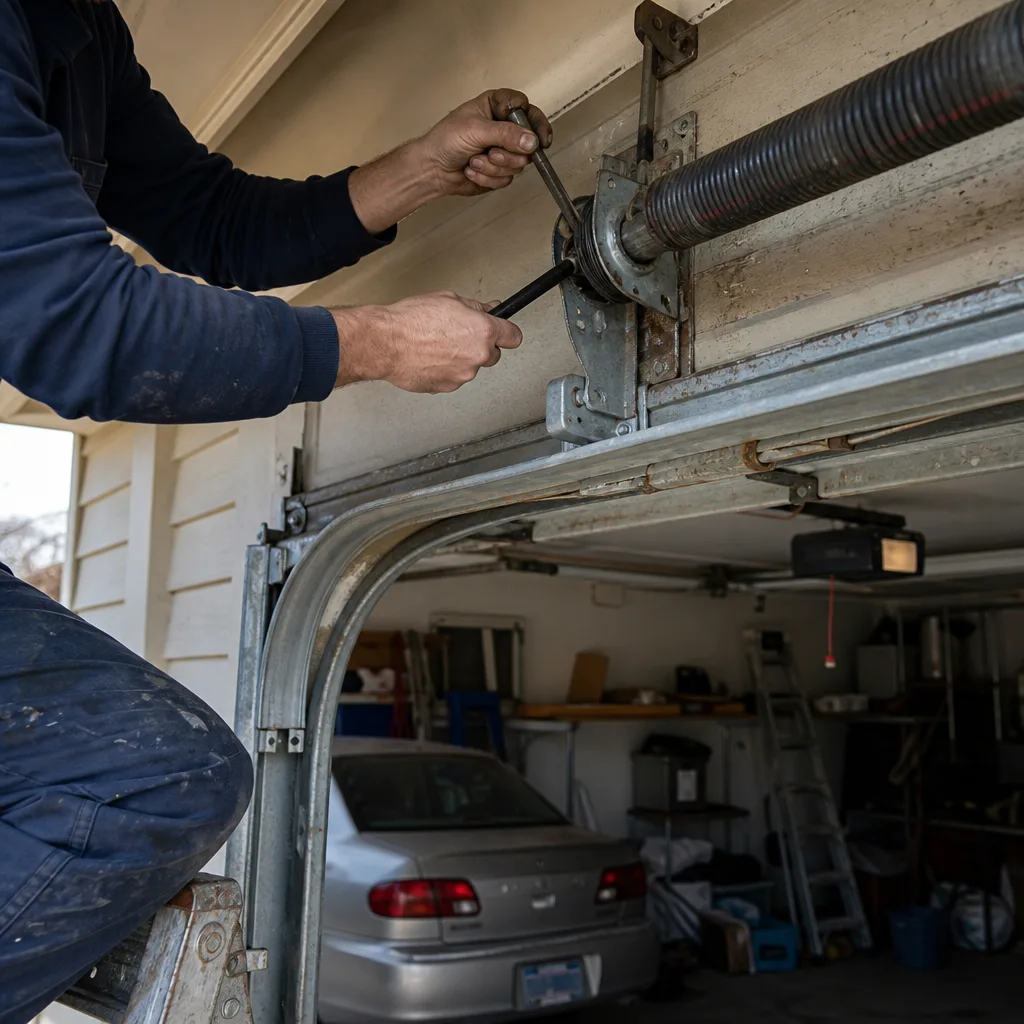 Before
 After
After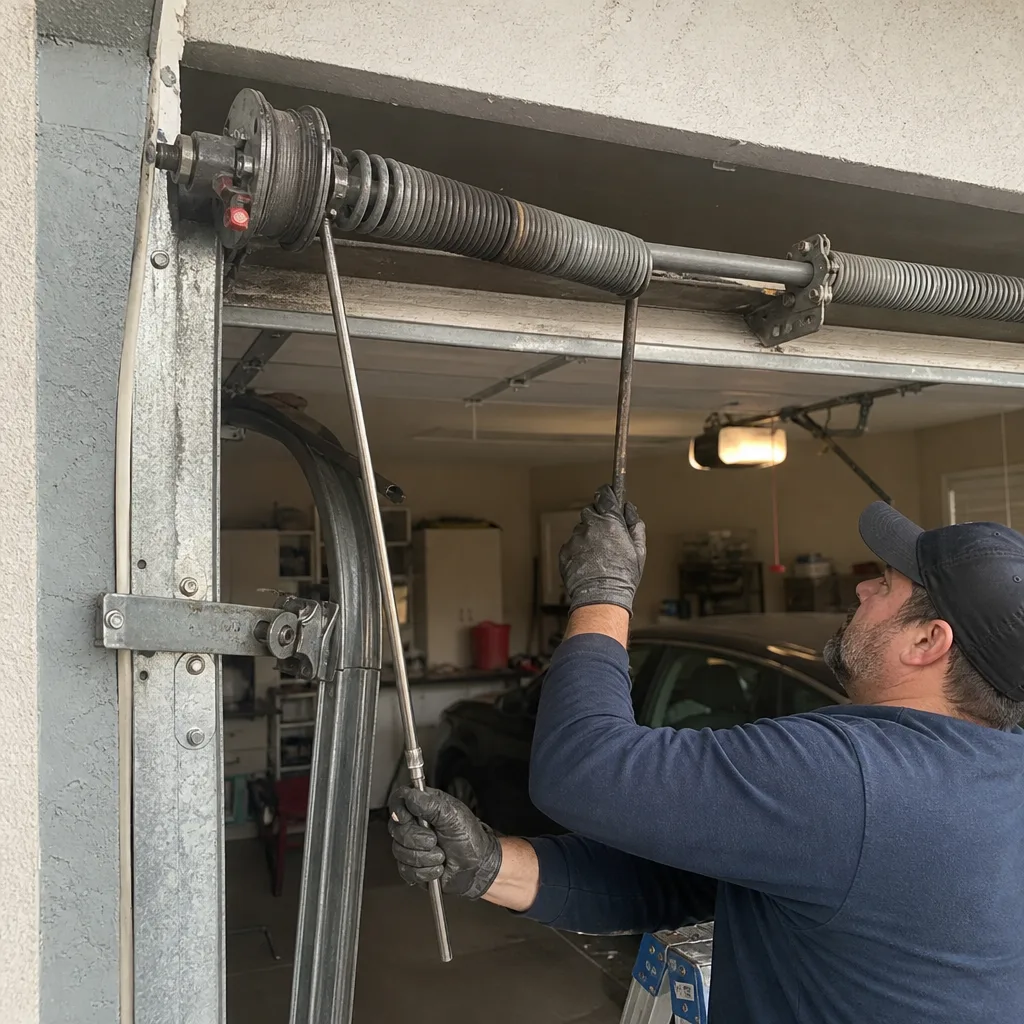 Before
 After
AfterWhen to Call a Professional
Call a professional when you see any sign in the same-day service list above: a separated spring, a frayed cable, or a door off its track. Call within a week when you hear grinding, popping, or scraping, or when the door hesitates or reverses. Call for a routine inspection once a year in Jacksonville, because our climate reduces the margin of error on aging components. Browse more guides & resources on keeping your door reliable year-round.
Doyle Garage Doors Jacksonville offers free estimates anywhere in Jacksonville and the surrounding Duval County communities. Call (904) 549-9535 and a live person answers, day or night, weekends and holidays included. You will get a written price before any work starts, and every repair includes a written 365-day guarantee. If it fails within the year, we come back and fix it at no charge.
Frequently Asked Questions
A spring that is about to break usually gives warning through a popping sound from the spring assembly, a visible hairline gap in the coil, or a door that suddenly feels heavier than it did a month ago. In Jacksonville, spring failures also cluster in summer months when heat adds stress to already-fatigued metal. If you hear popping, schedule a spring inspection immediately. Call (904) 549-9535 for a free estimate and a written price before any work begins.
A hesitation before opening almost always means uneven tension, either from a weakening torsion spring or from the opener’s travel limits drifting out of calibration. In Jacksonville we see this pattern in homes across Mandarin, Riverside, and San Marco, and it progresses to complete spring failure within 30 to 90 days if left unaddressed. This is a scheduled-repair situation, not an emergency, but do not wait more than a couple of weeks.
Most common repairs in Jacksonville run between $120 and $400. Roller replacement or track realignment costs $90 to $180. Torsion spring replacement runs $180 to $340 for a single spring and $280 to $450 for a dual-spring system. Opener replacement costs $400 to $700 installed. Emergency repairs after a full failure run $600 to $1,200. These are Jacksonville market prices from 2025, and the exact quote depends on your door model and configuration. Every quote from us is written and handed to you before work starts.
No. Lift cables are under the same extreme tension as torsion springs, and a cable that snaps during a DIY attempt acts like a steel whip. The risk of serious injury is not worth the $150 to $250 a professional cable replacement costs. This is a job for a trained technician with proper tools and safety procedures.
Yes. Homes within five miles of the ocean or the Intracoastal see accelerated corrosion on tracks, cables, springs, and panel edges. Salt-haze cloudiness on galvanized track, orange rust streaking on panel bottoms, and corroded cable anchors are all signs of salt-air damage. If you live in Jacksonville Beach, Atlantic Beach, Neptune Beach, or any coastal community, annual inspections matter more than they do inland.
For coastal Jacksonville homes, we recommend Amarr and Clopay doors with steel construction and corrosion-resistant hardware. Both brands offer models designed for high-humidity, salt-air environments, and both hold their finish longer than budget alternatives within five miles of the beach. For openers, LiftMaster and Chamberlain are the two we service most often, and both have proven reliable in our local conditions. Call (904) 549-9535 for a brand-specific recommendation based on your location within Jacksonville.
The Bottom Line
A garage door tells you what is wrong before it fails. The hesitation, the grinding, the popping, the rust streaks on the panel, the chalky white deposits on the concrete: these are not random occurrences. They are diagnostic signals, and they are specific enough that a trained eye can identify the failing component and the repair timeline from a single inspection. Jacksonville’s salt air, humidity, and summer heat compress the warning window, which means a door that would give a homeowner in the Midwest six months of warning gives a Jacksonville homeowner six to eight weeks. The cost of reading the signals and scheduling a repair on your own terms is a few hundred dollars. The cost of ignoring them is an emergency call, a higher invoice, and a garage you cannot open when you need it. Learn the signs. Trust what they tell you. And when you need a professional in Jacksonville, call (904) 549-9535 for a written, upfront quote before a single bolt is turned.
Written by Aaron Teague, Owner at Doyle Garage Doors Jacksonville, serving Jacksonville since 2001.