
Last updated October 16, 2026
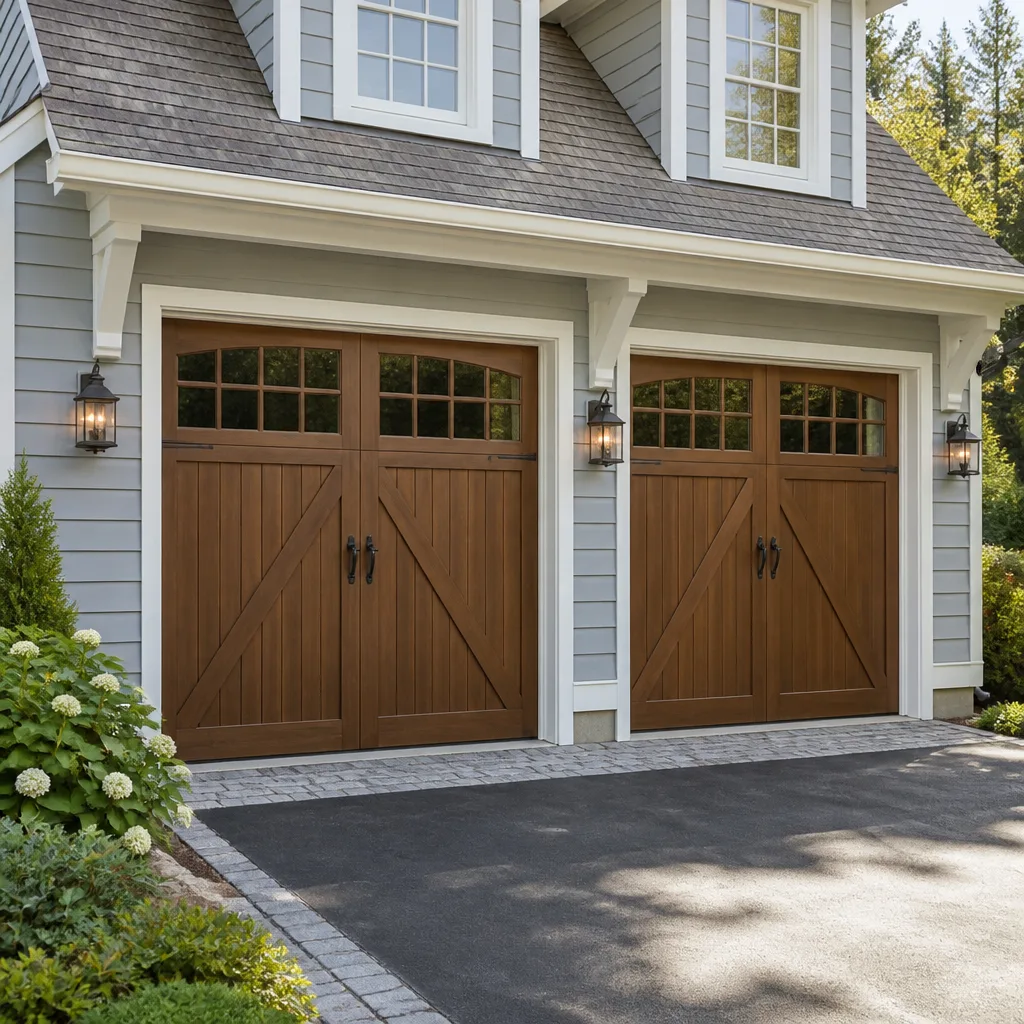 Carriage house
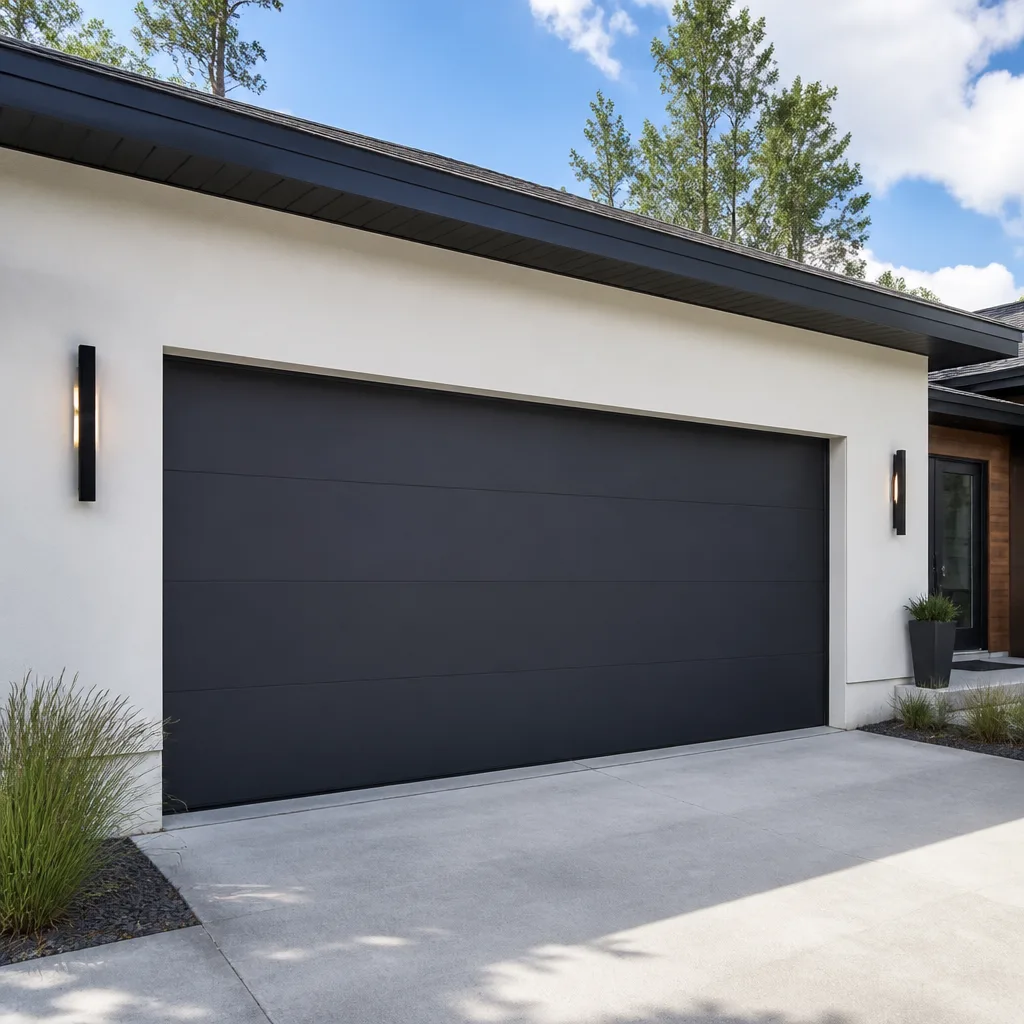 Modern flush
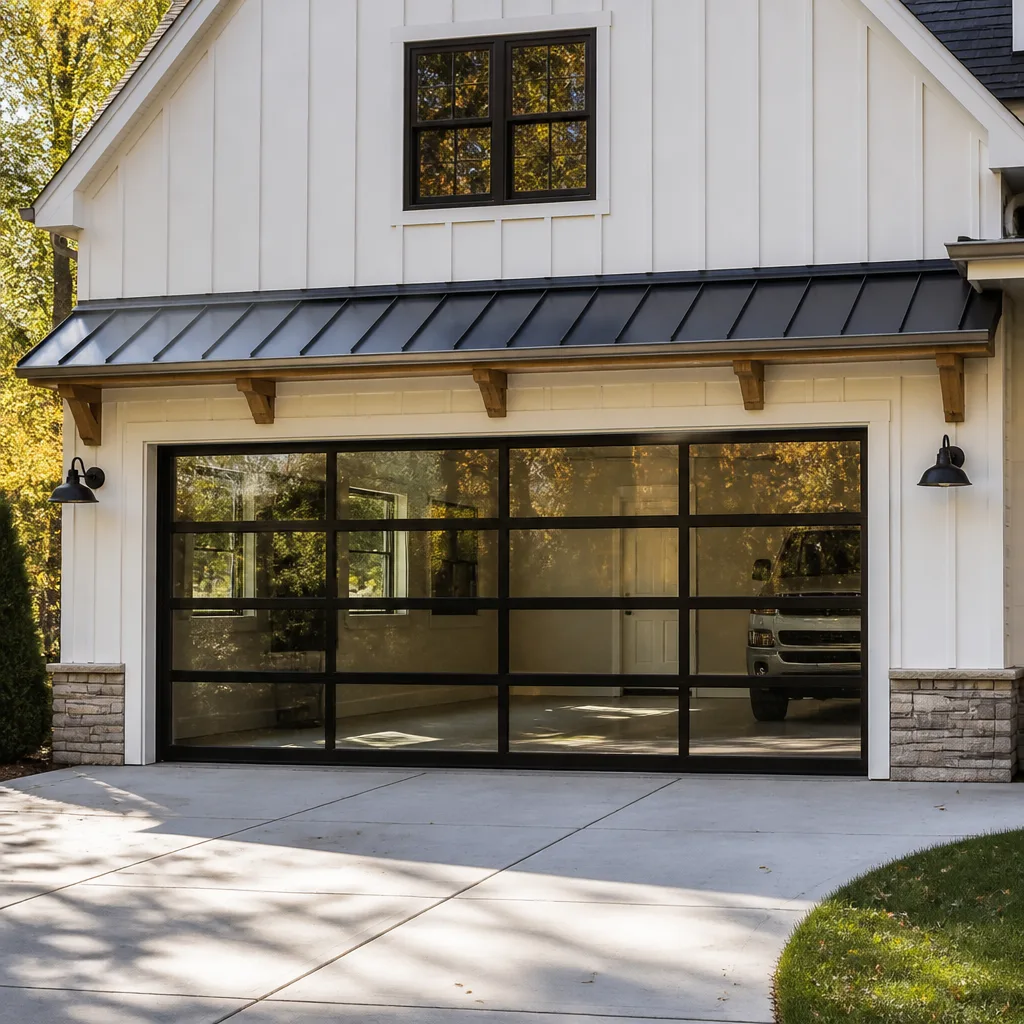 Full-view glass
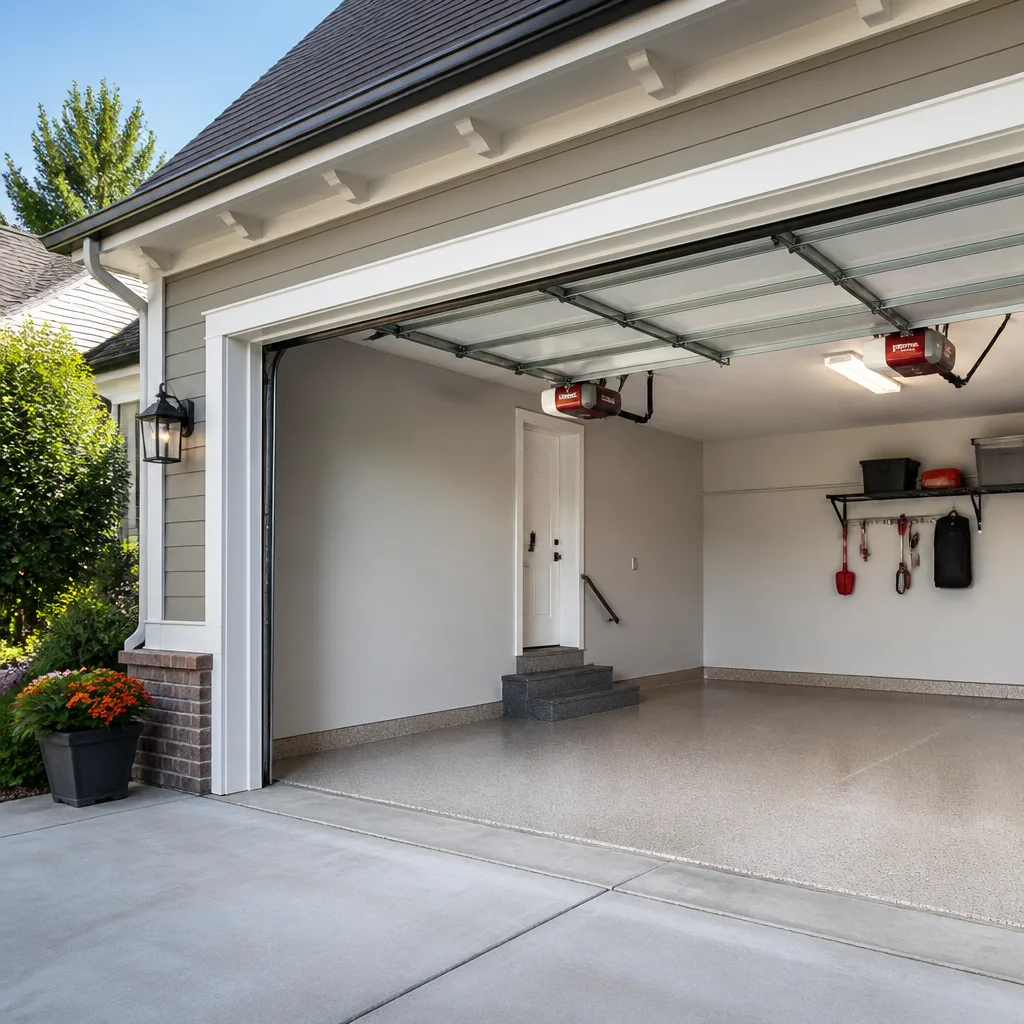 LiftMaster openers
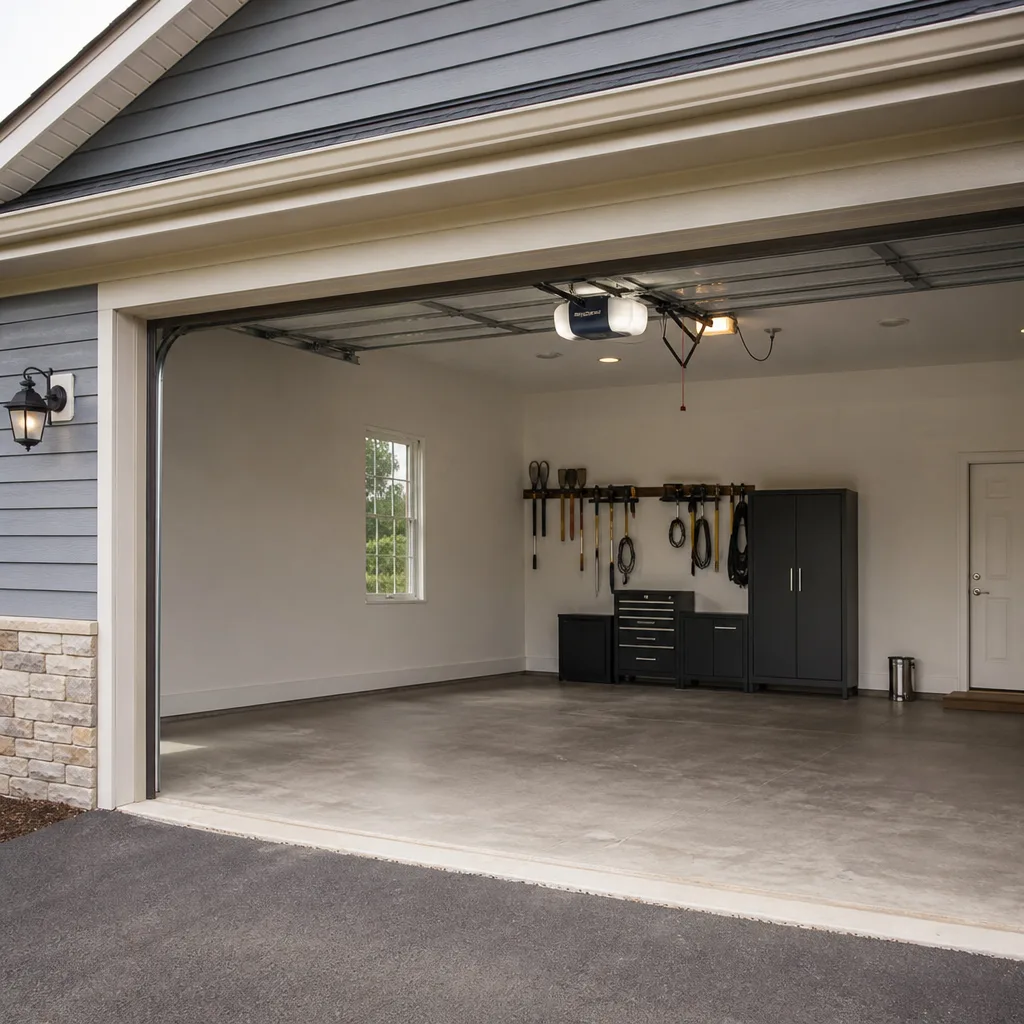 Chamberlain openers
Full 25-point door and opener safety check with every visit - springs, cables, rollers, tracks, and your LiftMaster or Chamberlain opener included
You get a price before we start. It does not change when the truck arrives.
Get your free estimateThe Complete Guide to Garage Door in Jacksonville
The average Jacksonville homeowner replaces garage door springs roughly 40% sooner than the national lifespan estimate. It’s rarely the spring’s fault. Jacksonville’s salt air, summer humidity that sits above 70% for months at a time, and a hurricane code that quietly shapes which doors are even legal to install work together to age doors faster here than in Orlando, Atlanta, or Charlotte. This guide explains what actually fails on Jacksonville doors, why it fails here specifically, what repairs cost in this market, and how to buy a door that will last 15 years instead of 7. For Garage Door Cost Breakdown: The Jacksonville Homeowner’s Reference for 2026 level detail on pricing, see our dedicated cost guide. If you own a home anywhere in Duval County, this is the background most garage door companies won’t take the time to give you.
Styles & brands we work with
Quick Answer
A garage door in Jacksonville typically lasts 15 to 30 years depending on material and maintenance, but springs, rollers, and cables fail much sooner and should be replaced long before the door itself. Coastal neighborhoods like Atlantic Beach, Neptune Beach, and Intracoastal West see faster corrosion than inland areas like Mandarin or Argyle Forest, which means homeowners there should budget for spring replacement every 5 to 7 years instead of the national 8 to 10. The short version: buy a corrosion-resistant door, schedule a tune-up annually, and never ignore a door that sounds or moves differently than it did last month.
Table of Contents
- How Jacksonville’s Climate Attacks Your Garage Door
- Which Door Materials Hold Up Best in Northeast Florida
- Jacksonville’s Hurricane Code and What It Means for Your Door
- The Real Lifecycle Cost of Jacksonville’s Three Most Common Doors
- Torsion Spring Failure: The Most Common Jacksonville Repair
- Garage Door Openers: What Breaks and What Jacksonville Humidity Does to Them
- What the Threshold Verified Standard Means in Practice
- A Jacksonville Garage Door Maintenance Schedule That Works
- Common Mistakes to Avoid
- When to Call a Professional
- Frequently Asked Questions
- The Bottom Line
How Jacksonville’s Climate Attacks Your Garage Door
Jacksonville sits at a geographic convergence point that is uniquely hard on overhead doors. The Atlantic Ocean is 20 minutes east, the St. Johns River runs through the center of the city, and summer afternoons bring daily thunderstorms that spike humidity to 90% or higher. That combination of airborne salt, persistent moisture, and intense UV exposure doesn’t just weather a door’s finish. It gets inside the mechanical parts.
Here’s what we see in the field, neighborhood by neighborhood.
Coastal Zip Codes: Atlantic Beach, Neptune Beach, Jacksonville Beach, Intracoastal West
Salt aerosol is the defining factor. Rust forms on torsion spring coils within two to three years of installation. The springs don’t snap because they were cheap; they snap because corrosion pits the steel, and each pitted spot becomes a stress concentration. A spring that would last 10,000 cycles in dry air might fail at 6,000 cycles four miles from the surf. Cable drums corrode too, and once a drum develops rust scale, the lift cables don’t spool cleanly. The door starts jerking, then a cable frays, then it snaps. We replace more cables in Beach zip codes than anywhere else in Jacksonville.
Riverfront Neighborhoods: San Marco, Ortega, Riverside, Avondale
The St. Johns River doesn’t carry the same salt load as the ocean, but it carries humidity of its own, and houses here are older. Many garage doors in Riverside and Avondale date to the 1930s and 1940s. The original wood doors are beautiful and functionally obsolete. Roller bearings seize, hinges pull out of dry-rotted wood, and the door’s weight drifts as the wood absorbs and releases moisture seasonally. Homeowners in these neighborhoods face a recurring choice between restoring a door that is part of the home’s character or replacing it with a steel door designed to look original.
Inland Areas: Mandarin, Argyle Forest, Oakleaf, Bartram Park
These neighborhoods sit far enough from the water that salt corrosion is a minor factor. The bigger problem is humidity plus afternoon heat. Rubber weather seals degrade, nylon rollers absorb moisture and swell, and steel panels without proper factory paint builds show rust at the bottom edge where rainwater splashes. The good news: inland Jacksonville doors consistently outlast coastal doors by 3 to 5 years on every component.
What this means for you: if your zip code starts with 32210, 32250, 32233, or 32266, you should budget for spring replacement at 5 to 7 years. If you’re in 32223, 32258, or 32273, 7 to 9 years is realistic. Either way, an annual inspection catches corrosion before it becomes a snapped spring at 7 a.m. on a workday.
Which Door Materials Hold Up Best in Northeast Florida
Not all garage doors are built for Jacksonville’s conditions. National guides write about steel, aluminum, wood, and fiberglass in generic terms. Here’s how each performs in this specific climate, with real trade context.
Steel Doors: The Default Choice, With One Catch
Steel is the workhorse of the Jacksonville market, and most steel doors installed here are 24, 25, or 26 gauge. That number matters: 26-gauge steel is thinner and dents more easily, but it’s lighter and costs less. 24-gauge is what we recommend for most Jacksonville homes because it resists wind load and hail better. The catch is rust prevention. A quality steel door has a galvanized or galvalume substrate under a baked-on polyester or polyurethane finish. Skip the substrate and the door will rust at the bottom rail within five years, especially in coastal zip codes. Clopay and Amarr both make steel doors with genuinely good corrosion packages for Florida, and those are the brands we install most often here.
Aluminum Doors: Right for the Coast, Wrong for Many Homes
Aluminum doesn’t rust, which makes it the obvious choice for Atlantic Beach and Neptune Beach. But aluminum is lighter and more flexible than steel, which means it does poorly on wide double doors unless reinforced. Modern aluminum doors with a 6000-series aluminum frame and powder-coated finish work well for single-car garage openings within a mile of the ocean. For an 18-foot double door, a reinforced steel door usually costs the same and performs better over time.
Fiberglass Composite: Growing in Jacksonville, for Good Reason
Fiberglass composite doors don’t corrode, don’t rot, and don’t warp in humidity. That makes them genuinely well-suited to Jacksonville’s climate, and we’re installing more of them every year in both coastal and riverfront neighborhoods. The tradeoff is cost: a fiberglass door typically runs 25% to 40% more than a comparable steel door. For a homeowner who plans to stay in the house 10 or more years, that premium often pays for itself in reduced maintenance and longer service life. For a home you’ll sell in three years, steel is the better financial choice.
Wood Doors: Beautiful, and Expensive to Keep Alive Here
Solid wood doors, especially the original doors in Riverside, Avondale, and Springfield, are part of Jacksonville’s architectural character. They also require the most maintenance of any door type. In our humidity, wood expands and contracts with the seasons, which throws off the balance constantly. Painting or sealing every two to three years is mandatory, not optional. If you own a historic home and want to keep the wood door, budget for annual balance adjustments and expect hinge and frame repairs every few years. If you want a wood look without the maintenance, several steel and fiberglass doors now reproduce the grain convincingly enough that most neighbors won’t know until they touch it.
Jacksonville’s Hurricane Code and What It Means for Your Door
Jacksonville sits in a wind-borne debris region, and the Florida Building Code treats garage doors as structural components, not accessories. That has real consequences for what you can legally install and what your insurer will cover.
Here’s the timeline that matters. Homes built after March 2002 are subject to the Florida Building Code’s wind-load requirements, which means their garage doors must be rated for the design wind speed of their location. In Jacksonville, that’s typically 120 to 140 mph depending on the exact parcel. Homes built before 2002 could have doors that meet no wind standard at all.
When you replace a garage door on any Jacksonville home, the new door must comply with the current code. That means a wind-load-rated door with a product approval number, often secured with reinforced tracks and additional jamb brackets. A building permit is required for door replacement in Duval County, and the door manufacturer’s product approval documents must be available for inspection. For the full legal picture, read our guide to Garage Door Permits, Codes & Inspections in FL: What You Need to Know.
Insurance is the other driver. Many Jacksonville homeowners insurers now ask whether the garage door is wind-rated, especially for homes east of the Intracoastal or in flood-prone areas. A non-compliant door can cost you a surcharge or a denied claim after a storm. Some insurers offer discounts for a wind-rated door. That discount alone can offset part of the upgrade cost over a few years.
Our recommendation for Jacksonville: if you’re replacing a door and the current one isn’t wind-rated, don’t retrofit halfway. Install a properly rated door with the right track system from the start. The incremental cost is usually $300 to $600 over a non-rated door in this market, and it buys both legal compliance and insurance leverage.
The Real Lifecycle Cost of Jacksonville’s Three Most Common Doors
Purchase price is the number everyone asks about, but it’s the wrong number. What matters in Jacksonville is what the door costs per year of service. Here are the three configurations we see most often, with realistic local pricing and lifecycle math.
Option 1: Basic Steel Pan Door
- Typical installed cost in Jacksonville: $900 to $1,400 for a single 16×7 door
- Expected service life in inland Jacksonville: 12 to 15 years
- Expected service life within 3 miles of the ocean: 8 to 10 years
- Spring replacements over its life: 2 to 3, at $180 to $340 per replacement
- Annual maintenance: $75 to $120 for tune-ups, or DIY if you’re diligent
- Approximate cost per year: $110 to $160 inland, $150 to $220 coastal
Option 2: Insulated Steel Door, 24-Gauge, Wind-Rated
- Typical installed cost in Jacksonville: $1,500 to $2,400 for a single 16×7 door
- Expected service life in inland Jacksonville: 18 to 22 years
- Expected service life within 3 miles of the ocean: 14 to 18 years
- Spring replacements over its life: 2, at $200 to $360 per replacement
- Annual maintenance: $75 to $120, or DIY
- Insurance benefit: Some Jacksonville insurers apply a wind-mitigation discount
- Approximate cost per year: $95 to $135 inland, $115 to $165 coastal
Option 3: Fiberglass Composite Door
- Typical installed cost in Jacksonville: $2,000 to $3,200 for a single 16×7 door
- Expected service life in any Jacksonville neighborhood: 20 to 25 years with basic care
- Spring replacements over its life: 2, at $200 to $360 per replacement
- Rust risk: None on the door itself; hardware still needs attention near the coast
- Approximate cost per year: $105 to $145, consistent across zip codes
The pattern here is simple. The cheap door is not the cheap door. A basic pan door in a coastal Jacksonville neighborhood costs more per year than an insulated wind-rated steel door in Mandarin. If you live near the water, spending more up front for corrosion resistance and a wind rating is the financially literate choice.
Torsion Spring Failure: The Most Common Jacksonville Repair
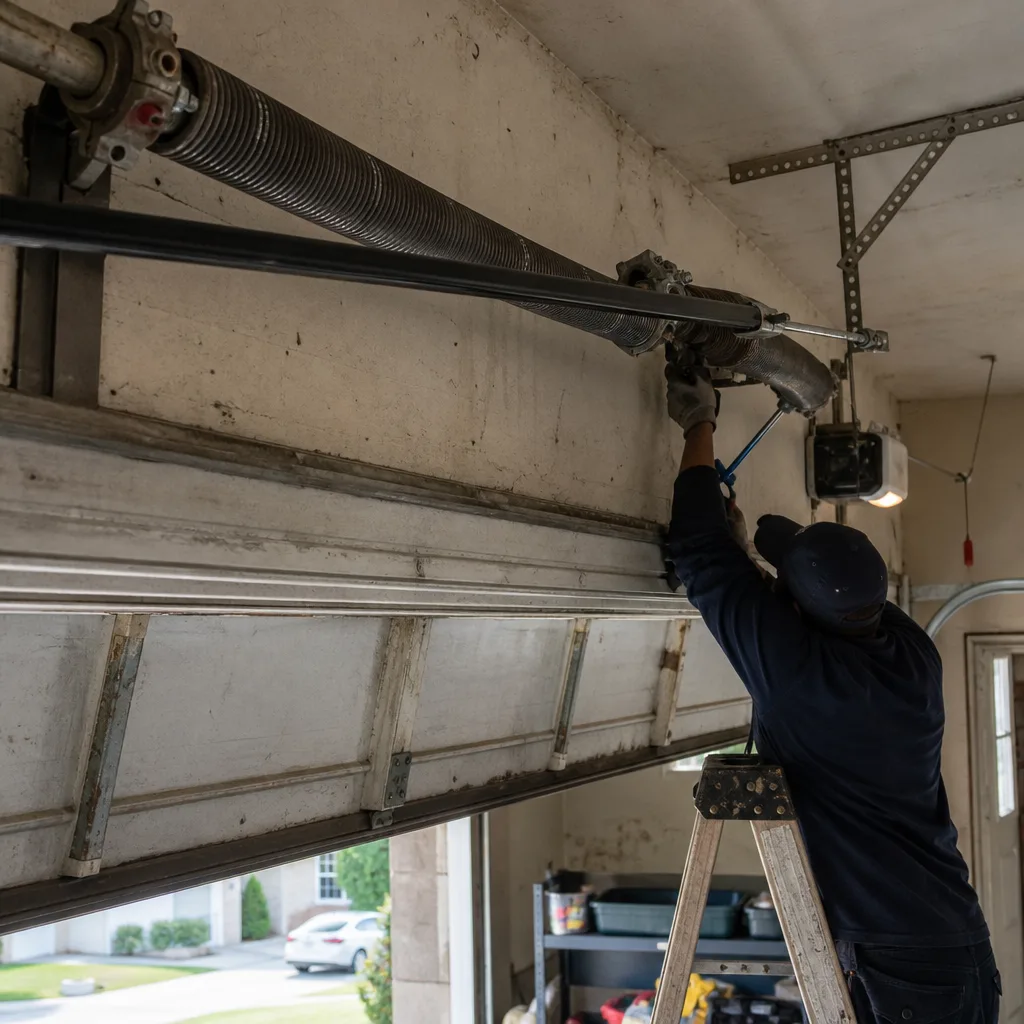
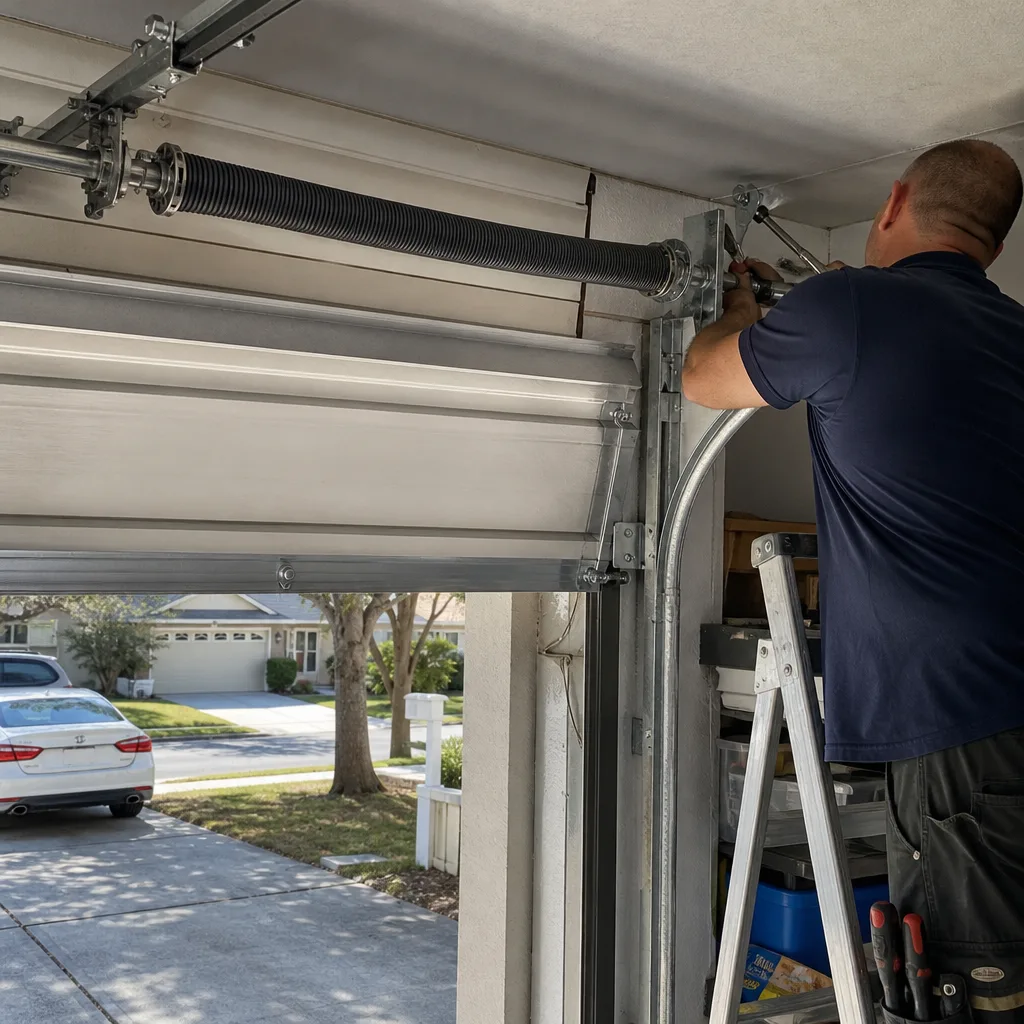
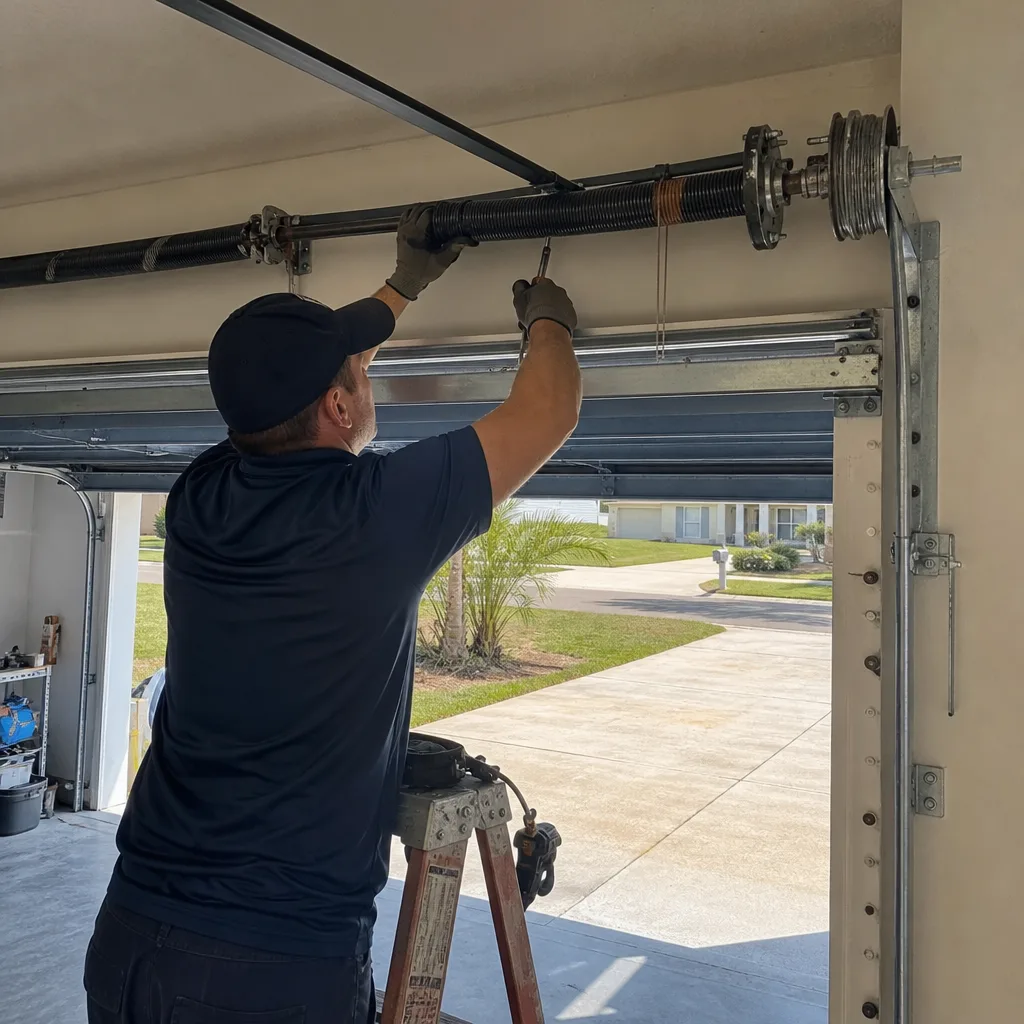
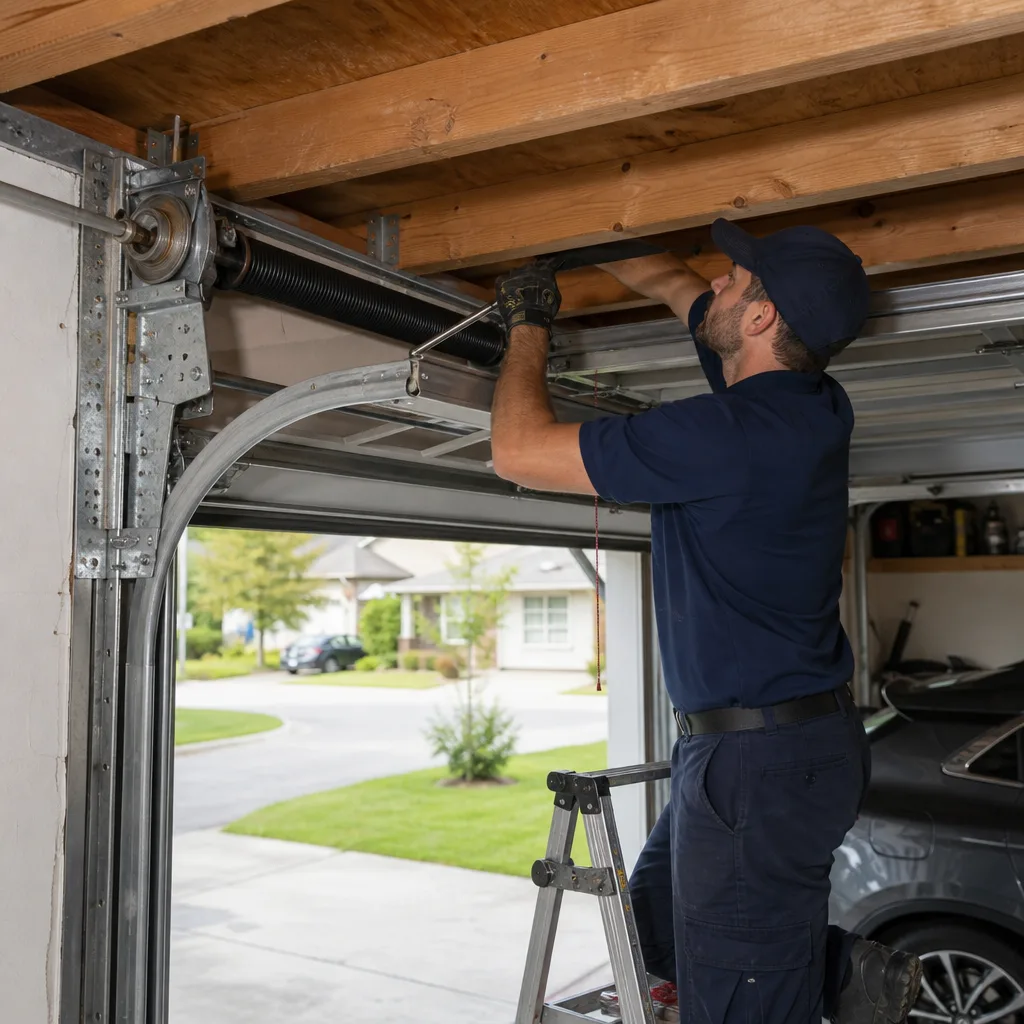
If there’s one repair every Jacksonville homeowner will face, it’s a broken torsion spring. The torsion spring is the large coil mounted horizontally above the door opening. It stores the mechanical energy that lifts the door, which means it does hundreds of pounds of work every single time you open or close.
In Jacksonville, torsion springs fail in predictable ways. Coastal zip codes see rust pitting that starts a fatigue crack, usually within 5 to 7 years. Inland springs last longer but often fail from cycle fatigue, since many Jacksonville homeowners use their garage as the primary entrance. A spring rated for 10,000 cycles lasts about 7 years at four open-close cycles a day. Two cycles a day extends that to roughly 13 years.
What a Broken Torsion Spring Sounds Like and What to Do
- You hear a loud bang from the garage. It sounds like a gunshot or a heavy object dropped inside the wall. That’s the spring releasing its stored energy all at once.
- Discontinue using the door immediately. Do not try to open it with the opener, and do not try to lift it manually. The door is now dead weight, and the opener is not designed to move it without spring assistance.
- Check the spring above the door. You’ll see a visible gap in the coil where it has snapped, usually on the left or right side of the center bearing plate.
- Call a garage door company. This is not a DIY repair. Torsion springs are wound under tension that can cause serious injury or death if released improperly. A qualified technician will replace both springs, not just the broken one, because when one fails the other has the same number of cycles on it and is about to go.
What Spring Replacement Costs in Jacksonville
Here are the numbers we quote most often:
- Single spring replacement (parts and labor): $160 to $240
- Pair of springs, standard cycle rating (10,000 cycles): $280 to $380
- Pair of springs, high-cycle rating (20,000 to 25,000 cycles): $360 to $480
- Emergency same-day service call in Jacksonville: $60 to $120 trip charge, often waived if we do the repair
High-cycle springs cost more up front but are the right call for most Jacksonville homes because they last 12 to 15 years instead of 7. For a door you plan to keep, that’s the better financial play. For full details on what our repair visits include, see our Garage Door Repair in Jacksonville page.
Garage Door Openers: What Breaks and What Jacksonville Humidity Does to Them
Garage door openers are simpler machines than most people think: a motor, a drive mechanism, a logic board, a trolley carriage, and safety sensors. When an opener fails in Jacksonville, the cause is usually one of three things: a worn gear in the motor head, a trolley carriage that has stripped out, or a logic board damaged by power surges during summer thunderstorms.
Jacksonville’s afternoon lightning storms are a genuine risk factor for garage door openers. A nearby strike can fry the logic board even if nothing else in the house is damaged. If your opener works from the wall button but not the remotes, or if the remotes lose their programming every few weeks, the board is the likely culprit. Surge protection on the garage outlet helps, but it’s not a complete shield against a direct hit.
Humidity causes its own quiet damage. Openers manufactured more than 10 years ago often have steel drive screws that rust and bind. Nylon gears are sealed and do fine in humidity, but a worn nylon gear in a LiftMaster or Chamberlain opener will strip out over time. If your opener runs but the door doesn’t move, and you hear a grinding or ratcheting sound, that’s the gear.
Newer openers from Chamberlain and Genie hold up better in Northeast Florida than the 1990s units we still occasionally find in older Jacksonville homes. The key maintenance item is lubrication: the drive screw or chain needs light lubrication every year, and the carriage should be inspected for slop. We cover opener replacement and repair in depth on our Garage Door Opener Repair in Jacksonville page.
What the Threshold Verified Standard Means in Practice
Garage door repair has a trust problem, and Jacksonville is not immune. Any company can print magnets, knock on doors, and call themselves a repair service. The homeowner has no way to verify who is standing in their driveway until the door is already open. That’s the problem the Threshold Verified standard exists to solve, and it’s the reason Doyle Garage Doors Jacksonville operates the way we do.
Here is what the standard means on a real service call.
First, you know who is coming before they arrive. When you book a repair, you receive the technician’s name and photo in advance. You see who will walk up your driveway before you open the door. That’s not a courtesy; it’s a security practice. The technician is background-checked and identity-verified through the Threshold Group’s process, and they arrive in a clean, marked uniform with a photo ID badge visible at the door.
Second, the price is written down before any work starts. Not a verbal estimate, not a range spoken over the phone and inflated later. A written price, handed to you, that covers the repair, the parts, and the labor. You sign it before we turn a single bolt. If the cost changes for any reason, we stop work and get your written approval first. No invoice surprises, ever.
Third, every repair carries the 365-Day Done Right Promise in writing. That’s a one-year guarantee, clearly stated, included at no charge. If the repair fails within 365 days of the service date, we come back and make it right at no charge. No arguments, no prorated warranty, no fine print. The free second visit is automatic.
This is the difference between a handshake and a written contract. Jacksonville has plenty of the former. We’d rather give you the latter.
A Jacksonville Garage Door Maintenance Schedule That Works
Garage doors don’t ask for much, but they do ask on a schedule. Here’s the annual rhythm we recommend for Jacksonville homeowners, timed to the seasons that actually affect doors here.
Spring: Pre-Hurricane Season Inspection (March to April)
- Inspect torsion springs for rust. Light surface rust is normal, especially near the coast. Deep pitting or visible cracks mean the spring is nearing end of life. Replace it before it fails on its own schedule.
- Check lift cables for fraying. Run your fingers along the cable with light pressure. If you feel a broken strand, that cable is done. Cables snap under load, and a snapped cable can whip.
- Lubricate rollers, hinges, and springs with a light penetrating oil, not WD-40. Use a product designed for garage doors.
- Test the auto-reverse safety feature. Place a 2×4 on the ground under the door and close it. The door should reverse within 2 seconds of contacting the board.
- Verify that all track brackets are tight and the track is still aligned. Hurricane season winds press against the door face, and a loose bracket amplifies the stress.
Fall: Post-Summer Assessment (October to November)
- Inspect the bottom weather seal. Jacksonville’s summer storms soak it repeatedly, and a cracked seal lets water, leaves, and palmetto bugs in. Replace if it’s brittle.
- Check the door balance. Disconnect the opener by pulling the red release handle with the door closed. Lift the door manually to waist height. It should stay in place. If it falls or rises, the springs are no longer holding it, and the opener is working harder than it should.
- Tighten all fasteners. Humidity cycles cause wood frames to swell and contract, which loosens bolts over time.
- Test the safety sensors at the base of the track. Wave an object in front of one while the door closes. It should reverse. If it doesn’t, the sensors need adjustment or replacement.
This schedule takes about 30 minutes twice a year and prevents most of the emergency calls we get in Jacksonville. The most common maintenance mistake is doing nothing until the door fails. The second most common is doing the wrong thing: spraying WD-40 on nylon rollers, tightening springs without proper tools, or ignoring an unbalanced door until the opener burns out.
Common Mistakes to Avoid
- Ignoring rust on torsion springs until they snap. Rust pitting is the pre-failure warning sign. Once a spring shows deep rust, it’s not a matter of if it breaks, but when. In Jacksonville’s coastal zip codes, that “when” is usually within six months of visible pitting.
- Replacing only one spring when the other fails. Both springs have the same number of cycles. The surviving spring is as tired as the broken one and will fail soon. Replacing the pair costs more up front and less per year.
- Buying the cheapest steel door without checking the gauge or paint system. A 26-gauge door with a thin paint build will rust at the bottom rail and look terrible within four years in Jacksonville humidity. Buy 24-gauge with a galvanized substrate. The cost difference is modest. The appearance difference at year five is not.
- Assuming your old door meets current hurricane code. If your home was built before 2002, your door likely has no wind rating. Your insurance company may care even if you don’t. A wind-rated replacement is a legal requirement and an insurance asset.
- Lubricating the door with WD-40. WD-40 is a water displacer, not a lubricant. It disolves the existing grease and leaves the part drier than before. Use a purpose-made garage door lubricant instead.
- Letting a stranger into your home without verifying who they are. Garage door technicians work in your garage, often with access to your home or at minimum your vehicles and belongings. Any technician you hire should be willing to show a photo ID badge, confirm their name before arrival, and put every price in writing. If they won’t, find someone who will.
- Deferring an unbalanced door because it still opens. An unbalanced door forces the opener motor to work harder, which burns out the logic board or drive gear prematurely. Fixing the balance is a $150 to $250 job. Replacing a prematurely dead opener is $350 to $600.
When to Call a Professional
Some garage door tasks are genuinely DIY. Lubricating rollers, tightening track bolts, and testing the auto-reverse function are all reasonable homeowner tasks with the right precautions. Other tasks are not, and the line is clear. Our DIY vs Professional Garage Door: The Jacksonville Homeowner’s Decision Guide walks through exactly where that line falls.
Call a professional when a torsion spring breaks. Those springs are under hundreds of pounds of tension, and the winding process requires specialized tools and training. A mistake can result in serious injury or death. This is not an overstatement; it is the reality of the trade.
Call a professional when a lift cable frays or snaps. Cables run alongside the door and carry the door’s weight when the spring releases it. A snapped cable can whip with enough force to cut deeply.
Call a professional when the door comes off its tracks. A door that has jumped the track is unstable and can fall if grabbed. Re-seating a door is a two-person job with the right technique.
And call a professional when you need a new door or opener installed. Jacksonville’s permit and wind-code requirements mean that installation work needs to be done correctly and documented. Doyle Garage Doors Jacksonville offers free estimates in Jacksonville. Call (904) 549-9535 and we’ll schedule a visit, send the technician’s name and photo in advance, and put every price in writing before work begins. For a full breakdown of what new door installation involves, see our Garage Door Installation in Jacksonville page.
Frequently Asked Questions
A broken torsion spring replacement in Jacksonville typically costs $160 to $240 for a single spring and $280 to $380 for a pair of standard-cycle springs, including parts and labor. High-cycle springs that last 12 to 15 years run $360 to $480 per pair. Call (904) 549-9535 for an exact written quote before any work starts.
Yes, in most cases. Broken spring repairs, cable replacements, and opener troubleshooting can usually be completed the same day you call. For more guides & resources on keeping your door reliable, visit our blog. Doyle Garage Doors Jacksonville offers same-day service throughout Jacksonville, and a live person answers the phone 24/7, including nights, weekends, and holidays.
For most Jacksonville homes, a 24-gauge insulated steel door with a galvanized substrate from Clopay or Amarr offers the best balance of corrosion resistance, wind rating, and cost. Within a mile of the ocean, aluminum or fiberglass composite doors are worth the premium. We service and install all major brands, including Chamberlain and Genie openers.
Yes, if the door is being replaced on any home in Duval County, the new door must meet current Florida Building Code wind-load requirements. Homes built after 2002 were required to have wind-rated doors from the start. For older homes, replacement is the trigger. Your insurance company may also ask about wind rating regardless of when the house was built.
In coastal Jacksonville neighborhoods within three miles of the ocean, plan on spring replacement every 5 to 7 years due to accelerated corrosion. Inland neighborhoods like Mandarin or Argyle Forest can typically get 7 to 10 years from standard springs. High-cycle springs extend those intervals to 12 to 15 years in most Jacksonville locations.
No. At Doyle Garage Doors Jacksonville, the price is written down and handed to you before any work starts. If the scope changes for any reason during the repair, we stop work and get your written approval for the new price first. The written quote is the price, and the 365-Day Done Right Promise is included on every repair at no extra charge.
The Bottom Line
Jacksonville is tough on garage doors in ways that generic advice doesn’t account for. Salt air eats springs in the beach zip codes, humidity wrecks wood doors along the river, and hurricane code quietly governs what you can legally install anywhere in Duval County. Knowing the local failure patterns changes how you buy and maintain a door: choose corrosion-resistant materials, budget for spring replacement on a Jacksonville-specific timeline, and never work with a company that won’t tell you who is coming to your door and what the job costs before they arrive. That local knowledge is the difference between a door that serves you for 15 years and one that fails at the worst possible moment.
Ready to have your Jacksonville garage door inspected or repaired? Call (904) 549-9535 for a free estimate. We’ll send the technician’s name and photo in advance, hand you a written price before any work begins, and stand behind the repair for 365 days in writing. If it’s not done right, we make it right. Learn more about who we are at our Doyle Garage Doors Jacksonville home page.
Written by Aaron Teague, Owner at Doyle Garage Doors Jacksonville, serving Jacksonville since 2001.
See the difference
 Before
 After
After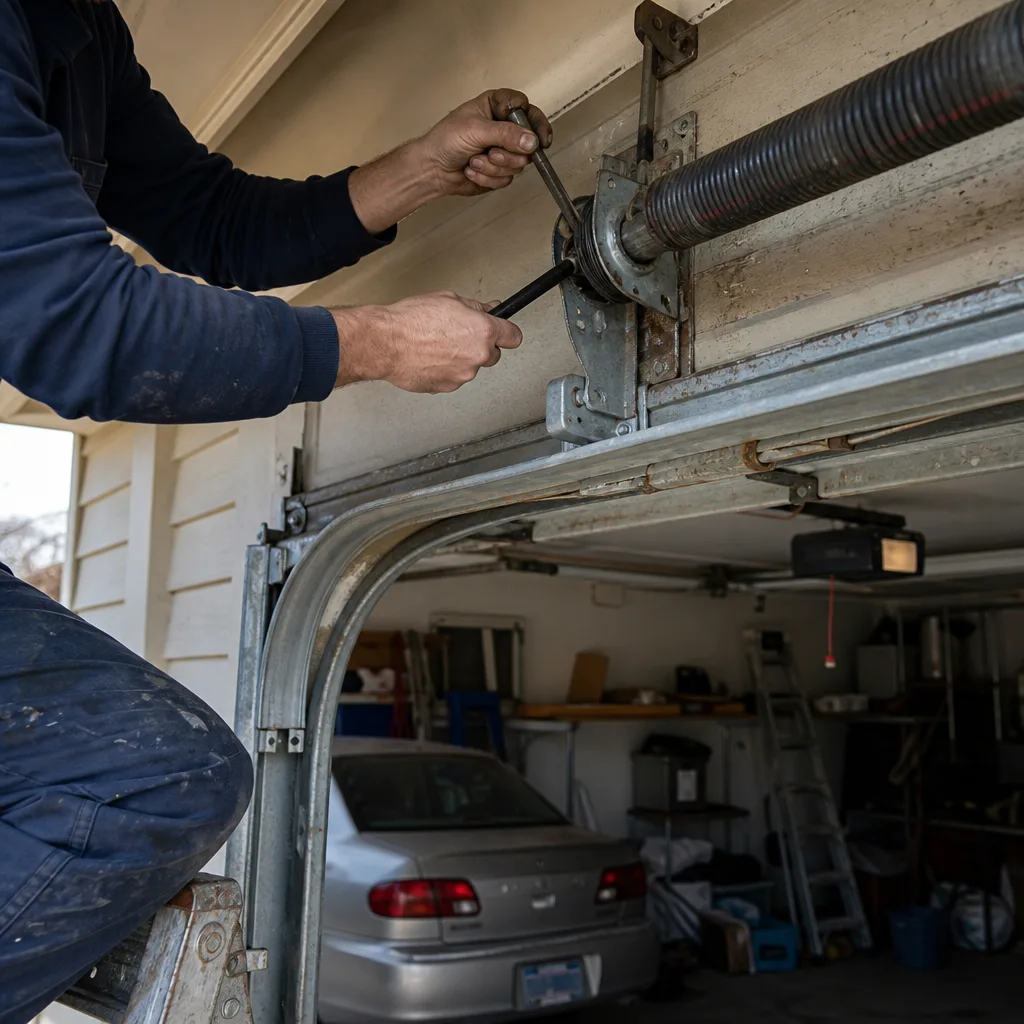 Before
 After
After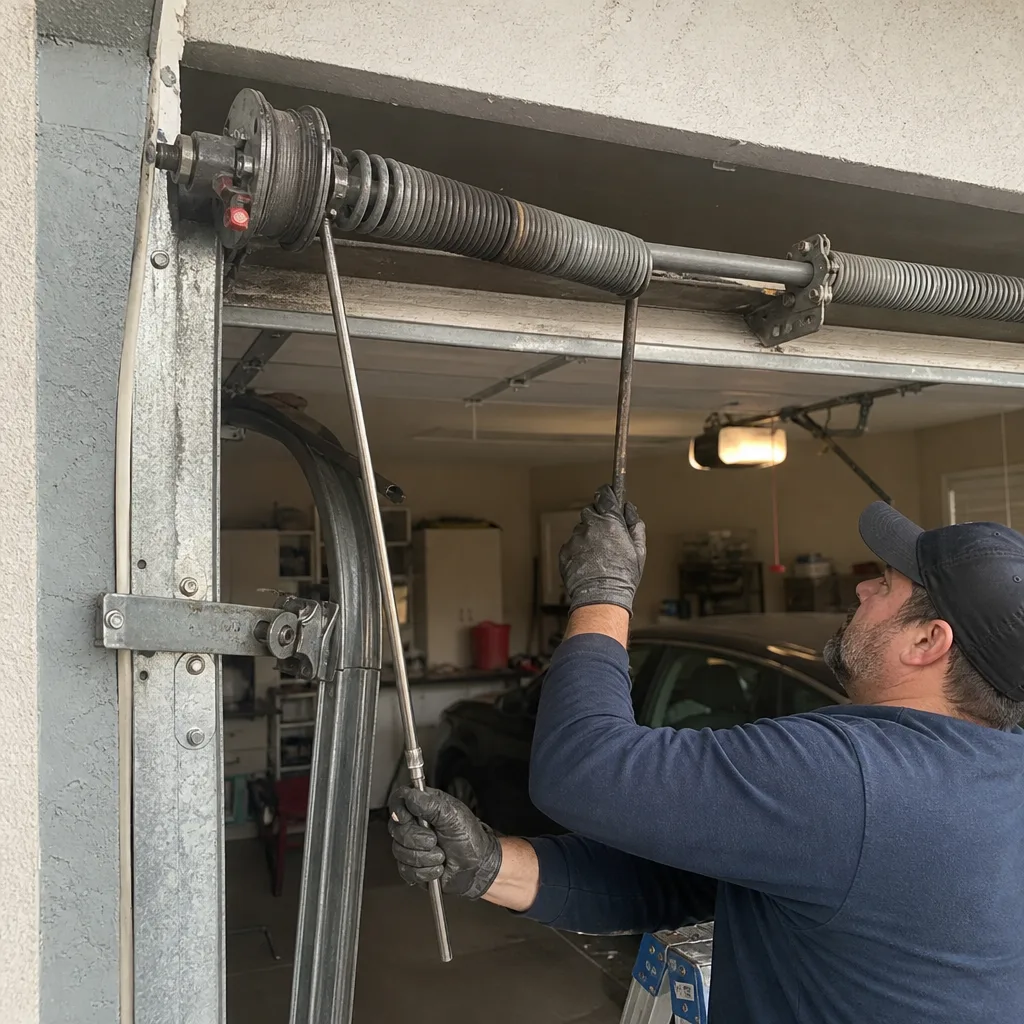 Before
 After
After