
Last updated October 16, 2026
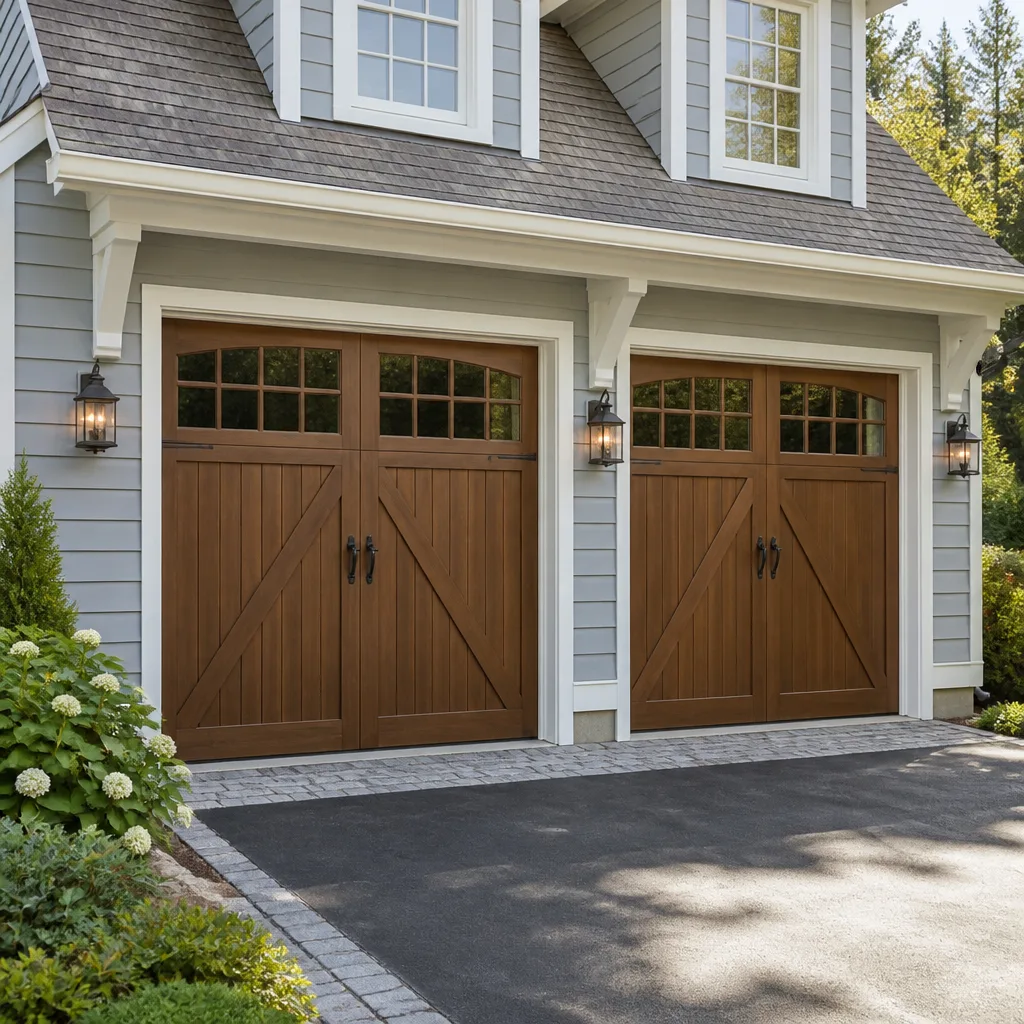 Carriage house
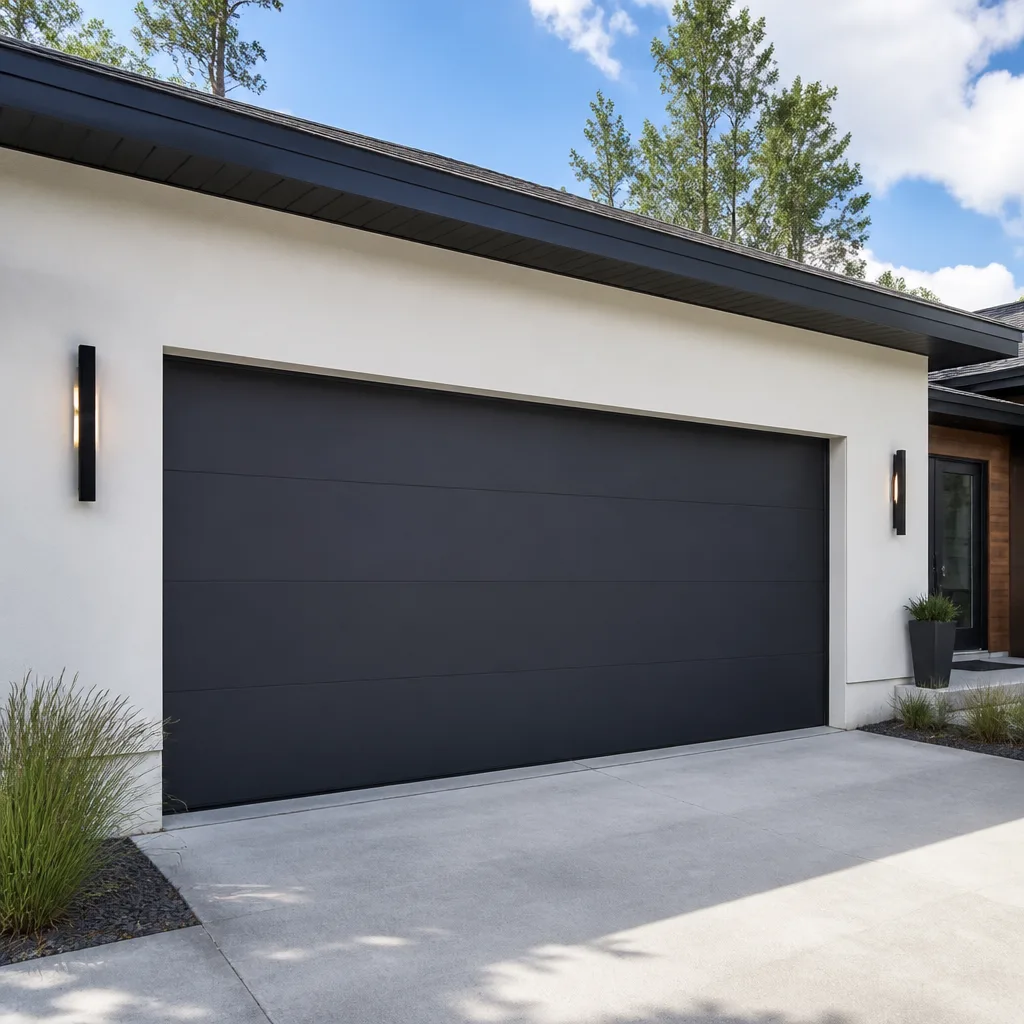 Modern flush
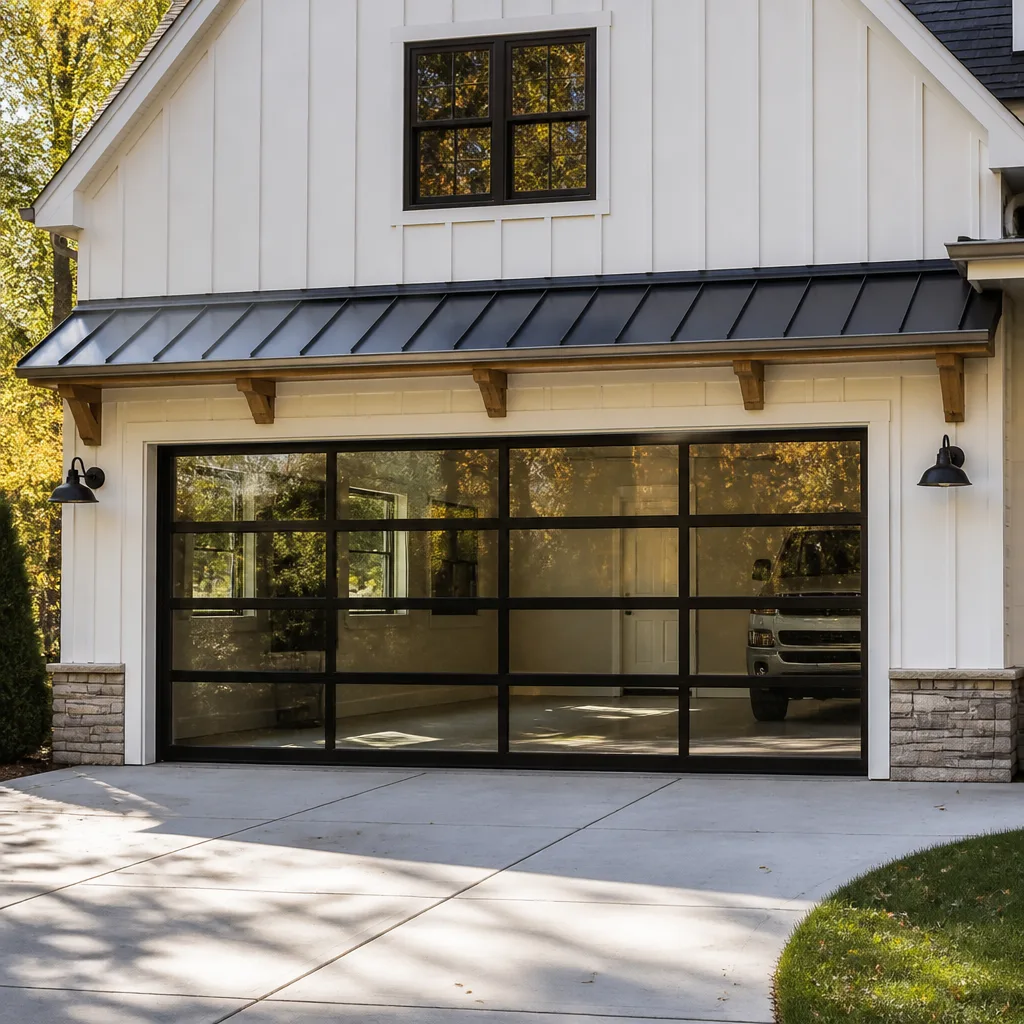 Full-view glass
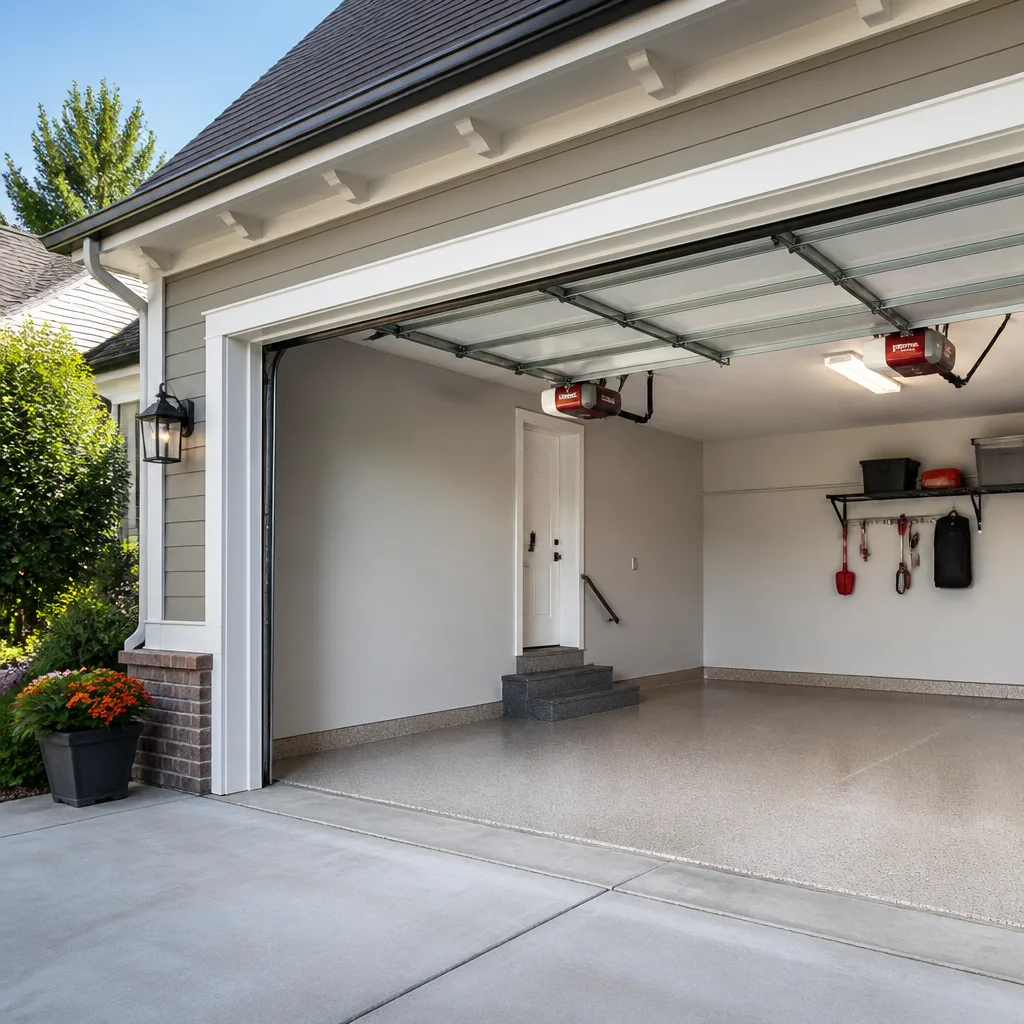 LiftMaster openers
 Chamberlain openers
Full 25-point door and opener safety check with every visit - springs, cables, rollers, tracks, and your LiftMaster or Chamberlain opener included
You get a price before we start. It does not change when the truck arrives.
Get your free estimateSeasonal Garage Door Care for Jacksonville: Year-Round Homeowner’s Guide
Jacksonville’s “winter” is actually the most dangerous season for garage door springs. Not because of cold snaps, but because the 30-degree temperature swings between a 45°F night and a 75°F afternoon cause metal expansion cycles that crack lubricant films and accelerate fatigue. Most national garage door guides tell you to do a spring-check and a fall-check. That advice was written for Ohio, not the First Coast. For a deeper look at local options and pricing, see our Garage Door Cost Breakdown: The Jacksonville Homeowner’s Reference for 2026. This guide replaces the generic four-seasons template with a four-phase Jacksonville framework: Pre-Storm, Hurricane Season Active, Post-Storm Reset, and Dry Season Tune. You’ll learn exactly what to inspect, when to do it, and which problems in Jacksonville are worth a call to a professional versus a ten-minute fix you can handle yourself.
Quick Answer
For a comprehensive overview of the local market, read The Complete Guide to Garage Door in Jacksonville. Seasonal garage door care in Jacksonville means working with four distinct phases, not four traditional seasons: storm-prep in April and May, hurricane-season vigilance from June through October, a post-storm reset in November, and a dry-season lubrication and safety tune from December through March. The highest-priority tasks are spring and cable inspection, opener force testing, bottom-seal replacement when cracking appears, and rust treatment on steel panels every 6 months. Expect to spend about 60 to 90 minutes per phase, or roughly 4 to 6 hours of total garage door maintenance per year in Jacksonville’s climate.
Table of Contents
- Why Jacksonville’s Climate Breaks Garage Doors Differently
- Phase 1: Pre-Storm Season Prep (April-May)
- Phase 2: Active Hurricane Season Vigilance (June-October)
- Phase 3: Post-Storm Reset (November)
- Phase 4: Dry Season Tune-Up (December-March)
- How Jacksonville’s Humidity Plateau Accelerates Rust (and What to Do)
- What You Can Safely Do Yourself (and What You Shouldn’t)
- Common Mistakes to Avoid
- When to Call a Professional
- Frequently Asked Questions
- The Bottom Line
Why Jacksonville’s Climate Breaks Garage Doors Differently
Jacksonville sits in a unique spot on the Southeast Atlantic coast: far enough north to get real temperature swings, far enough south to get months of subtropical humidity. The result is a garage door environment that punishes steel, nylon, and lubricant in ways a generic maintenance list never addresses.
The most overlooked factor is the temperature swing itself. A torsion spring – the large coil mounted above the door that does most of the lifting – is rated for a finite number of open-and-close cycles, typically 10,000. But that rating assumes stable temperature conditions. In Jacksonville, the spring metal expands in the afternoon heat and contracts at night. Over a single December-to-March dry season, a spring can go through 100 or more expansion-contraction cycles. Each cycle stresses the metal at the molecular level. Eventually, the spring snaps, often without warning. When we replace torsion springs in neighborhoods like Mandarin, Arlington, and San Marco, the failure almost always traces back to this fatigue pattern rather than a single dramatic event. Our technicians have replaced torsion springs in Jacksonville’s Riverside and Ortega neighborhoods where the failure happened at 3 a.m., with no storm, no impact, just accumulated stress.
Humidity is the second Jacksonville-specific factor. From June through September, average relative humidity sits above 90% most mornings. That moisture condenses on steel door panels, on the track rails, on the spring coils, and inside the opener motor housing. Steel rusts about four times faster in Jacksonville’s summer than it does in a dry climate like Phoenix. Nylon rollers – the small wheels that ride inside the vertical tracks – absorb moisture, which softens the nylon and accelerates wear by up to 40% compared to a dry-weather door. If you have a wood door, which is common in older Jacksonville neighborhoods like Springfield and Avondale, the humidity causes panel swelling that leads to binding, misalignment, and eventually cracks along the panel joints.
Salt air is the third factor, and it’s not limited to beachfront homes in Atlantic Beach or Neptune Beach. Jacksonville’s prevailing easterly winds carry salt aerosol several miles inland, especially during the March and April onshore-flow months. Salt accelerates corrosion on exposed metal parts: hinges, brackets, track bolts, and the bottom seal retainer. A galvanized steel track that might last 20 years in a place like Gainesville can show significant rust pitting after 8 to 10 years in Jacksonville’s closer-in neighborhoods like San Marco, Lakewood, and parts of the Southside.
This combination means Jacksonville homeowners need a maintenance rhythm that follows the weather itself, not the calendar. What follows is the exact schedule our technicians use when they assess doors across Duval County, and the same framework you can use at home.
If you’re looking for a broader overview of repair services, visit our Garage Door Repair in Jacksonville page.
Phase 1: Pre-Storm Season Prep (April-May)
April and May in Jacksonville are the calm before the storm season officially begins on June 1. This is the window to make your garage door as hurricane-ready as it can be. The pre-storm inspection doesn’t require special tools: a flashlight, a pair of gloves, and about 45 minutes on a Saturday morning.
A hurricane’s wind load doesn’t just push against the door from the outside. It creates an enormous pressure differential between the inside of the garage and the outside air. A single-car garage door can experience 1,200 to 1,500 pounds of total wind force during a Category 2 storm. If the door fails, the pressure inside the garage spikes, and that burst of internal pressure blows out windows, pushes up the roof deck, and compromises the entire home’s structural envelope. That’s why this pre-storm check matters more than any other seasonal task on this list.
Pre-Storm Inspection Checklist
- Check the wind-brace kit. If your door was installed after Florida’s 2002 building code update, it should have vertical steel braces on the inside face of each panel, held by brackets that anchor to the horizontal struts. Verify each brace is perpendicular to the panel and that no bolts are loose or missing. If your door is older than 2002 and has no brace kit, this is the single most important upgrade you can make before hurricane season. In our experience, fewer than half of the pre-2002 doors we inspect in Jacksonville have had a retrofit brace kit installed.
- Inspect the bottom seal for full perimeter contact. Close the door and look along the bottom edge from inside the garage. Any visible daylight means water can enter during a driving rain. The seal should compress evenly across the full width. If it’s flattened, cracked, or shorter than the door width by even half an inch, replace it now. A replacement bottom seal costs roughly $15 to $35 in Jacksonville and takes about 20 minutes with basic tools.
- Test the emergency release cord. Pull the red handle hanging from the opener trolley carriage – the sliding mechanism that moves the door along the rail. The door should disconnect from the opener and be operable by hand. Then re-engage it by pulling the cord toward the door until the trolley reconnects. If re-engagement is stiff or the door is hard to lift by hand, the door weight is not balanced or the track is binding, and you need a professional adjustment before storm season.
- Tighten all track bolts and hinge screws. Use a 7/16-inch socket on the bolts that hold the vertical and horizontal track sections. Loose bolts are a common source of door vibration and misalignment, and under wind load they allow the track to flex enough to throw the rollers out of alignment.
- Clear the drainage path. Check that the garage floor has a clear path for water to exit. Jacksonville’s heavy squalls can dump 2 to 3 inches of rain in an hour. If leaves or debris block the gap under the door or the small drain channel at the garage slab’s edge, water backs up and soaks the bottom panel, the seal retainer, and the track shoes.
If you do nothing else in the pre-storm phase, do the wind-brace check and the bottom seal check. Those two items address the two biggest storm vulnerabilities: structural blow-in and water intrusion.
Phase 2: Active Hurricane Season Vigilance (June-October)
Hurricane season in Jacksonville runs from June 1 through November 30, with the active peak falling between mid-August and mid-October. During these months, your maintenance routine shifts from prep work to responsiveness: monitoring the door for changes caused by high winds, heavy rain, and barometric swings.
The most common mid-season problem we see in Jacksonville is track misalignment from wind-driven door flex. During a strong thunderstorm, a fully closed garage door can bow inward by half an inch or more. If any roller was already marginal, that flexing is enough to push it off the track entirely. Symptoms include a door that starts to stick, makes a scraping sound during operation, or visibly leans to one side when halfway open. If you notice any of these, stop using the door immediately and have the track alignment checked. Running a door with a partially derailed roller scores the track and can bend the panel edge, turning a $75 adjustment into a $400 panel replacement.
Water intrusion is the second mid-season issue. Jacksonville’s summer deluges test the weather stripping along the sides and top of the door in ways the bottom seal alone can’t handle. Side weather stripping – the vinyl or rubber flaps that run vertically along both sides of the door opening – degrades under constant UV exposure and salt air. By July, it’s common to see gaps of an eighth to a quarter inch between the stripping and the door face. During a wind-driven rain from the east, water forced through those gaps runs down the inside of the track, puddles on the horizontal track sections, and drips onto the door panel and opener.
Here’s what to monitor during hurricane season:
- After every severe thunderstorm or tropical system, visually check the side and top weather stripping. Look for gaps, tears, or places where the stripping has pulled away from the frame. A gap wider than a dime’s thickness means it’s time to replace.
- Cycle the door once and listen. New sounds matter: a metallic ping usually indicates a roller hitting a flat spot; a grinding sound might be a bearing in the torsion spring tube failing; a squeal that wasn’t there last week is often a sign the opener’s drive belt is slipping or the trolley needs lubrication.
- Check the opener’s force settings after any impact. If a tree branch or flying debris hit the door, the opener may have been knocked out of calibration. Test the auto-reverse by placing a 2×4 flat on the ground under the door and closing it. If the door doesn’t reverse within 2 seconds of contact, the force setting is too high and the opener is unsafe to use.
- Inspect the tension on all four cables. The lift cables run vertically on both sides of the door and attach to the bottom brackets. They should be taut. A slack cable means the spring assembly is losing tension or a drum has slipped.
If you need opener service during the storm season, our Garage Door Opener Repair in Jacksonville page covers what’s involved. A broken opener in June is not a DIY project, and it’s not something to defer while the storm track is uncertain.
Phase 3: Post-Storm Reset (November)
November is Jacksonville’s reset month. The dramatic weather has passed, the days are cooler, and the air is finally dry enough to do maintenance work that wouldn’t hold up during the sticky months. This is when you inspect for damage that hurricanes left behind – and a lot of it is damage you won’t see in the immediate aftermath.
The sneakiest storm damage in Jacksonville is water infiltration that doesn’t reveal itself for weeks. A hurricane-force rain can drive water behind the door’s trim boards and into the frame cavity without leaving any visible trace at the time. Over the following weeks, that trapped moisture works into the weather stripping adhesive, rusts the track brackets, and begins to stain the bottom panel from the inside. By November, the evidence shows up as:
- Rust staining on the interior face of the bottom panel or along the bottom seal retainer. This usually indicates water pooled against the door from the inside, not from outside splash. The bottom seal may have allowed reverse-flow water entry during a flood event.
- Warped or swollen panels on wood doors. A panel that was flat in August and now shows a visible bow or a raised seam is holding moisture. The damage often originates along the horizontal rail joint where two stamped panels meet.
- Binding during operation. If the door hesitates, jerks, or sticks at a certain point in the travel, water damage to the frame or track alignment is the likely cause. The door’s weight is now fighting against a distorted path.
- White chalky residue on aluminum parts. That’s the beginning of aluminum corrosion, accelerated by salt spray that landed on the metal during the storm and never got rinsed off by subsequent rain.
Your November reset should also include a full-door cleaning. Mix a mild detergent – a capful of dish soap in a gallon of water works fine – and wash the exterior face of each panel. Pay attention to the seam where two panels meet. That horizontal line is where road spray, salt, and organic debris accumulate. Rinse thoroughly and dry the bottom two panels especially well. Then apply a light coat of automotive spray wax to the exterior steel panels. This isn’t just cosmetic; the wax puts a thin sacrificial layer between the steel and the salt-laden air that will return with the winter onshore winds.
Finally, test the full door balance. Disconnect the opener by pulling the emergency release, then manually lift the door halfway. It should stay in place at the halfway point without drifting up or down. If it drops, the springs are losing tension and need professional attention. If it rises, the springs have too much tension. Either condition will shorten the life of your opener motor and rollers. A balanced door is the single best predictor of a problem-free dry season.
Phase 4: Dry Season Tune-Up (December-March)
Jacksonville’s dry season is the closest thing we get to “standard” garage door weather – but it still has one trap that most guides miss: the temperature swings that make cold-weather lubrication a real problem. Here’s the sequence. A 45°F night causes the lithium grease on your torsion spring coil to thicken. The next afternoon at 75°F, that grease loosens again. Over a 4-month dry season, that happens 100 times or more. Each thermal cycle pushes the grease out of the contact points on the spring coil. By March, much of the actual metal-to-metal contact is running dry, and a dry spring is a spring that is quietly accumulating stress.
Dry Season Tune-Up Tasks
- Lubricate the torsion spring, hinges, and rollers with a garage door-specific spray lube, not WD-40. Use a lithium-based spray or a silicone-based product designed for garage doors. Spray the spring coils generously, then the hinge pins (the vertical metal pins where the hinge halves pivot), then the roller stems. Avoid spraying the track itself; a lubricated track reduces roller traction and causes the door to slip.
- Check every roller for wear. Nylon rollers with ball bearings should spin freely with no wobble. If a roller’s nylon outer wheel is cracked, chipped, or flat-spotted, replace it. Steel rollers should show no rust or flat spots. Worn rollers are one of the top causes of premature spring failure in Jacksonville, because a dragging roller makes the door heavier to lift, which means the spring does more work on every single cycle.
- Test the auto-reverse safety sensors. The sensors, also called photo eyes, sit near the floor on both sides of the door opening. Make sure their lenses are clean and aligned. Then test the auto-reverse by closing the door on a 2×4 or an unopened roll of paper towels placed flat on the ground. The door should reverse within 2 seconds. If it doesn’t, the opener is not compliant with federal safety standard UL 325, and you should stop using the door until a professional adjusts the force settings.
- Inspect the top panel and the horizontal track for signs of metal fatigue. The top panel takes more load than any other part of the door because it carries the attachment bracket for the opener arm. Hairline cracks along the top edge of the panel are a warning sign.
- Verify the opener’s manual release still works even when the door is all the way up. Run the door to the fully open position, then pull the emergency release. The door should drop a few inches and stop, held by the spring tension. If the door free-falls, the springs are severely out of balance and this is an emergency condition.
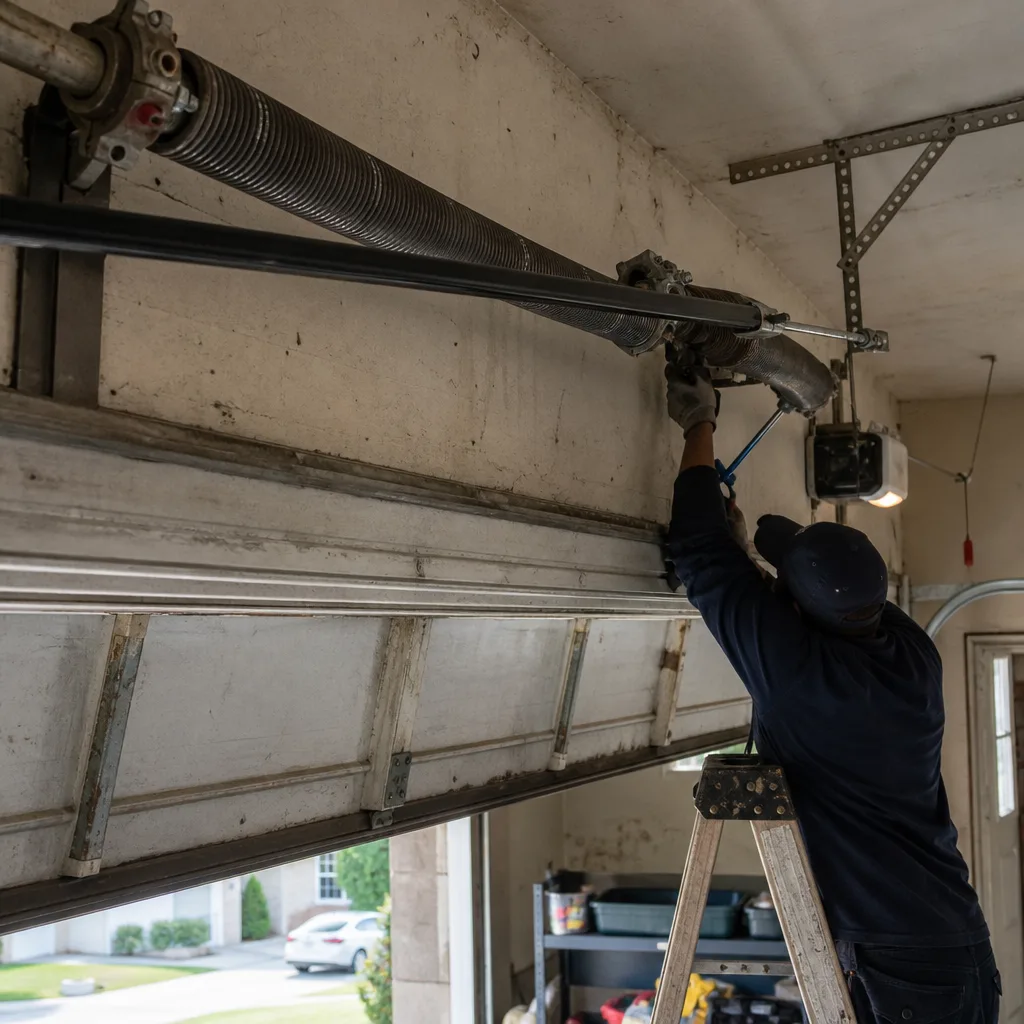
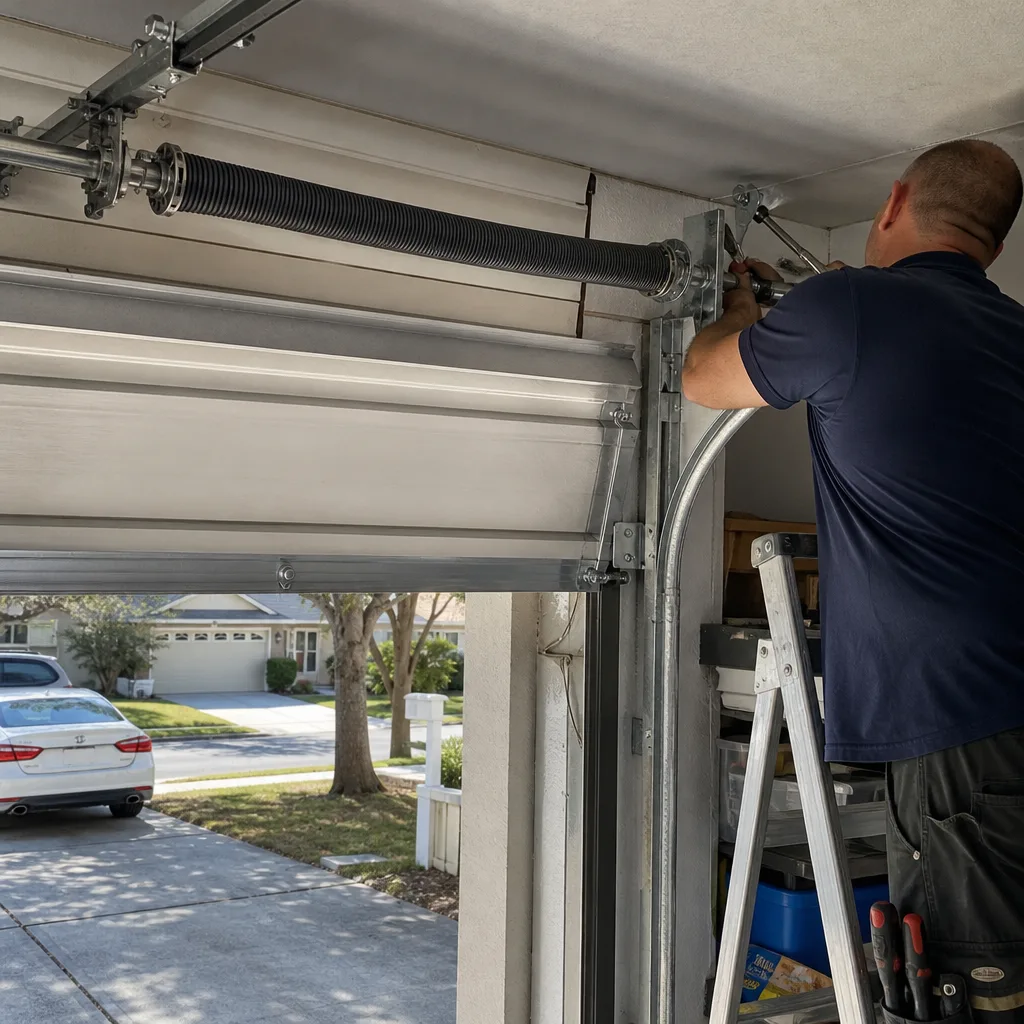
If you discover a broken spring, a snapped cable, or a bent track during any of these checks, that’s a Garage Door Repair in Jacksonville situation, not a maintenance fix. A torsion spring under tension is not a homeowner repair project. It’s the single most dangerous part on any home, and multiple Jacksonville homeowners are seriously injured each year attempting spring work without the proper tools and training.
How Jacksonville’s Humidity Plateau Accelerates Rust (and What to Do)
From June through September, Jacksonville’s average morning relative humidity sits between 88% and 96%. That’s not peak humidity; it’s the baseline. The implications for a steel garage door are not subtle.
Steel rusts when moisture sits on the surface long enough for oxygen to react with the iron. In most climates, morning dew burns off within an hour or two. In Jacksonville’s summer, the dew doesn’t burn off at all. It persists on the door surface from midnight until well after sunrise, and on shaded north-facing doors – common on garages that face the street in Jacksonville’s grid-style neighborhoods like Riverside and Murray Hill – it can remain almost all day. The result is 12 to 16 hours of continuous damp surface contact daily, for 120 consecutive days. That’s the equivalent of leaving your door in a light rain for the entire summer.
Once rust starts, it spreads. Florida’s humidity doesn’t just cause rust; it accelerates existing rust through a feedback loop. Rust is porous, so it absorbs moisture like a sponge. That trapped moisture feeds the corrosion reaction underneath the visible rust layer. A quarter-sized rust spot in June is often a palm-sized patch of pitting by October, and a structural hole by the following May.
What Actually Slows Jacksonville’s Rust Problem
- Surface wax every 4 to 6 months. We recommend a good-quality automotive paste wax or spray wax. Apply it to the exterior panel face, with extra attention to the bottom panel and the horizontal seams. This is the simplest, cheapest rust prevention measure, and it works on steel doors from Clopay, Amarr, and Wayne Dalton alike.
- Address scratches immediately. Any scratch that penetrates the painted surface exposes bare steel to Jacksonville’s humidity. Clean the scratch with rubbing alcohol, then apply touch-up paint or a rust-inhibiting primer. The door’s factory paint is a barrier; once broken, it needs to be re-established within a month or the rust begins.
- Check the underside of the bottom panel. This is the most rust-prone surface on the entire door, because it’s never painted at the factory. Moisture wicks upward from the garage floor. On older doors in Jacksonville’s Arlington or Eastside neighborhoods, we see bottom panels rusted through from the underside while the rest of the door looks fine.
- Keep the track hardware dry. Galvanized track is rust-resistant, but not rust-proof, and the bolts that hold the track to the wall are often the first items to corrode. A light spray of silicone on the track bolts after heavy rain or morning condensation events will extend their life.
What You Can Safely Do Yourself (and What You Shouldn’t)
Most of the maintenance in this guide is DIY-appropriate: cleaning, waxing, visual inspection, seal replacement, and lubrication. These tasks require no special skills and no unique tools. But there’s a hard line you should never cross on a garage door, and it’s drawn at the torsion spring. See our DIY vs Professional Garage Door: The Jacksonville Homeowner’s Decision Guide for help deciding what to tackle yourself.
The torsion spring is the large coil mounted on a steel tube above the door opening. It’s under enough tension to lift a 150- to 300-pound door, and when that tension releases unexpectedly, the spring unwinds with enough force to break bone, sever tissue, or cause fatal injury. We’re not being dramatic. The U.S. Consumer Product Safety Commission has documented thousands of garage door spring injuries, and many of them happen to homeowners who watched a YouTube tutorial and thought the job looked straightforward. It doesn’t look dangerous on video because the person doing the work has the right winding bars, the right training, and the experience to respect the tool. Without those three things, it’s a gamble with your hands and face.
Same rule applies to the lift cables that run up both sides of the door. They’re under the same tension as the spring. If a cable snaps while you’re working near it, the end whips with enough force to cause serious injury. If you see a frayed or broken cable, don’t try to remove it or unwind it. Close the door (if possible), disconnect the opener, and call a professional.
Here’s what you can safely do:
- Lubricate springs, hinges, and rollers. Use a spray lube, wear gloves, and stay clear of the spring’s moving parts.
- Replace the bottom seal. This involves sliding out the old seal, cutting the new one to length, and sliding it into the retainer channel. It’s a 20-minute job with no safety concerns.
- Tighten loose bolts and screws on the track and hinges. Use hand tools only. Do not use an impact driver on garage door hardware.
- Clean and wax panels. Use a hose, mild soap, and a soft cloth. Avoid pressure washers, which force water into the panel seams and the track.
- Clean and align the photo-eye sensors. Use a soft dry cloth and check that both sensor lights are solid, not blinking.
- Test the auto-reverse and the emergency release. Both tests take under five minutes and involve no danger.
Common Mistakes to Avoid
- Using WD-40 as a garage door lubricant. WD-40 is a solvent and a water displacer, not a long-term lubricant. It strips away the existing grease and leaves metal-to-metal contact. We see this constantly in Jacksonville, especially in the dry season when doors get stiff and homeowners reach for the nearest can in the garage.
- Lubricating the track rails. Tracks are meant to be dry. Lubricant on the track reduces roller traction, causing the door to slip and strain the opener. If a door is noisy, the rollers or hinges need lube, not the track.
- Skipping the bottom seal replacement because it’s “just cosmetic.” A cracked bottom seal in Jacksonville means storm water drives under the door during heavy rain, soaking the bottom panel from underneath. That leads to rust, panel delamination, and in severe cases, damage to whatever is stored in the garage.
- Ignoring a slow door. A door that operates unusually slowly, especially in the cooler mornings of December through February, is often a sign that the grease has thickened and the opener is straining against extra resistance. Running the opener against that resistance shortens its motor life, and a quality opener like a Genie or LiftMaster can cost $250 to $500 to replace.
- Doing spring work without the right tools. Every spring we replace in Jacksonville, the homeowner tried to adjust or remove it themselves first. The cost of a DIY spring attempt – in medical bills and door damage – is always higher than the $180 to $340 a professional spring replacement costs in Jacksonville.
- Assuming hurricane prep means just boarding up windows. The garage door is the largest opening in the home. A door that blows in creates internal pressure that can lift the roof. Pre-storm garage door inspection should be part of every Jacksonville homeowner’s hurricane readiness checklist, right alongside the window shutters.
- Deferring a rust spot because “it’s just surface rust.” In Jacksonville’s nine-month rust window, surface rust becomes pitting faster than almost anywhere else in the country. A rust spot on a Clopay or Amarr steel door that’s treated in November costs nothing to fix. The same spot left untreated until May often means replacing the panel.
When to Call a Professional
Some situations should never be handled without a trained technician. Call a professional if you notice a snapped or visibly sagging torsion spring, a frayed or disconnected lift cable, a bent or misaligned track, a door that won’t stay open or drops suddenly when disengaged, an opener that reverses for no reason, or any visible damage to the door after a storm impact. These are safety-critical conditions, and each one can cause injury or further property damage if the door is used again before the issue is addressed.
Doyle Garage Doors Jacksonville offers free estimates in Jacksonville – call (904) 549-9535 and a live person answers, day or night, weekends and holidays included. We’ve been serving Jacksonville since 2001, and every job includes a written price before any work starts, a written guarantee on every repair, and a free second visit if the repair fails.
Frequently Asked Questions
A torsion spring replacement in Jacksonville typically runs between $180 and $340, including parts and labor. The exact price depends on the spring’s wire size and whether you have one or two springs. At Doyle Garage Doors Jacksonville, the price is written down and handed to you before any work starts – no verbal estimates, no surprises on the invoice. Call (904) 549-9535 for an exact quote, which is free.
Lubricate the torsion spring, hinges, and rollers every 3 to 4 months in Jacksonville, which means about four times per year. The city’s humidity cycle makes grease break down faster than in dry climates, and a door that’s squeaking in Mandarin in August is already running under extra friction. Use a lithium or silicone spray designed for garage doors.
No. Torsion springs are under extreme tension, and attempts to repair them without professional tools and training are a leading cause of serious hand and face injuries. In our experience, nearly every homeowner who attempts a spring repair in Jacksonville ends up calling a professional anyway, after the spring snaps or the door comes off its track. This is the one repair where the risk-to-savings ratio is completely out of balance.
A hurricane-ready garage door in Jacksonville has a working wind-brace kit installed, a bottom seal that makes full perimeter contact with no visible daylight, an emergency release cord that operates smoothly, and an auto-reverse that triggers within 2 seconds of contact. If any of these four items fails the check, correct it before the next named storm enters the forecast.
Steel doors from Clopay, Amarr, and Wayne Dalton all perform well in Jacksonville’s climate when they’re properly maintained, meaning waxed every 4 to 6 months and repaired at the first sign of a scratch or rust spot. We’re factory-trained on all these brands as well as Genie openers, and we service the full range of LiftMaster, Chamberlain, Genie, Clopay, Amarr, Wayne Dalton, Craftsman, and Raynor equipment.
A door that operates noticeably slower when Jacksonville’s temperatures drop into the 40s and 50s is usually a sign that old lubricant has thickened and is creating extra resistance against the opener motor. It’s not normal, and running the door under those conditions shortens the opener’s life. A seasonal lubrication and roller check usually resolves it.
The Bottom Line
Jacksonville doesn’t need a generic spring-and-fall garage door checklist. It needs a four-phase plan built around the city’s actual weather: storm prep in April and May, hurricane vigilance from June through October, a post-storm reset in November, and a dry-season tune from December through March. Each phase has its own priorities, from wind-brace inspection to rust treatment to cold-weather lubrication. The tasks that protect your door most – spring inspection, track bolt tightening, bottom seal replacement, and surface waxing – are all DIY-appropriate and take less than 90 minutes per phase. The tasks you should never attempt – spring replacement, cable work, track repair – are exactly the ones our technicians handle every day across Jacksonville. When a problem exceeds the maintenance checklist, call (904) 549-9535 for a free estimate with a written price before any work starts.
For more on the full range of services, start at our Doyle Garage Doors Jacksonville home page, or explore Garage Door Installation in Jacksonville if it’s time to replace an aging door entirely.
Written by Aaron Teague, Owner at Doyle Garage Doors Jacksonville, serving Jacksonville since 2001. Browse more guides & resources from our team.
Styles & brands we work with
See the difference
 Before
 After
After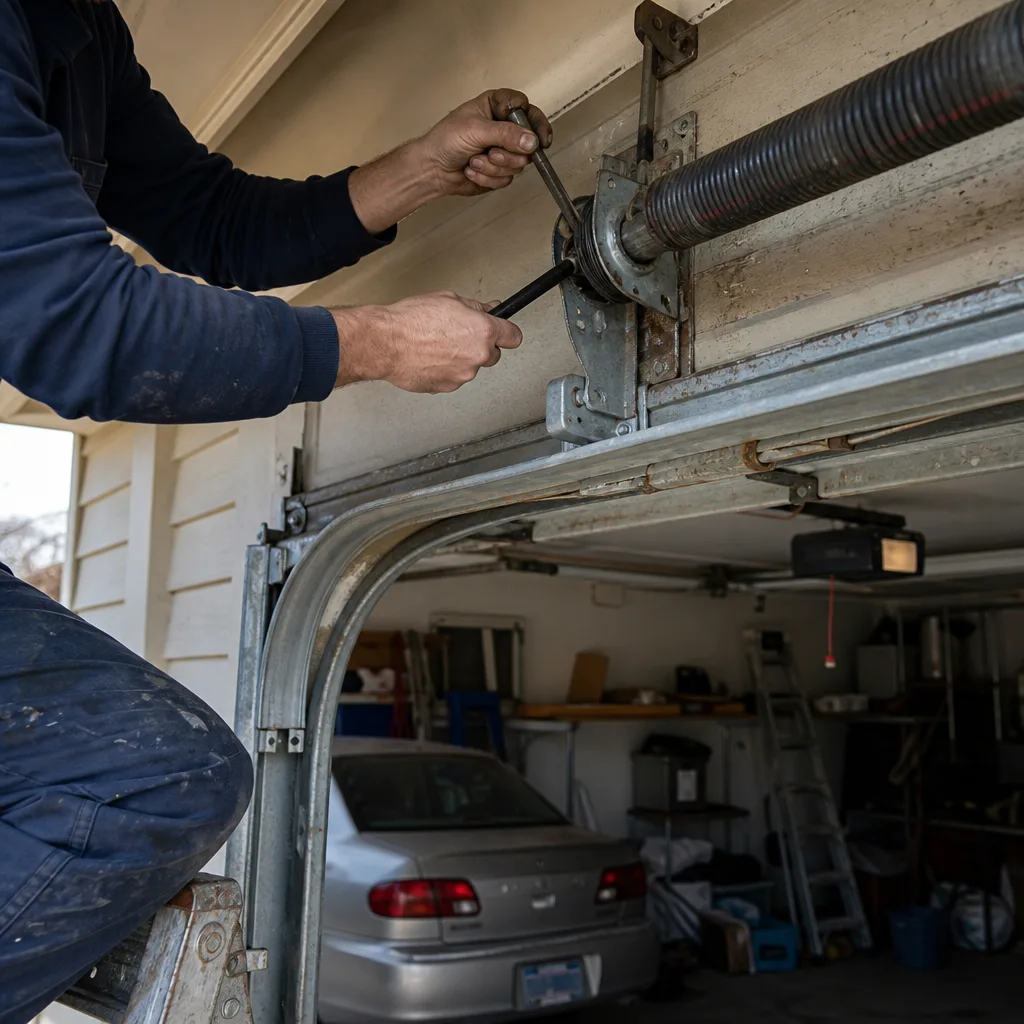 Before
 After
After Before
 After
After